Showing posts with label Twain. Show all posts

March 1, 2007

Huck Finn and the Supreme Court

Bezalel Stern, Columbia University Law School, has published "Huck Finn and the Civil Rights Cases: A Case Study in Supreme Court Influence," in the Columbia Journal of Law and the Arts. Here is the abstract.
I intend to show in this study that Mark Twain's Adventures of Huckleberry Finn was inherently shaped by, among other factors, a number of momentous decisions of the Supreme Court. These were decisions which strived to project the American society of the ante-bellum period into the post-bellum world. The decisions of the Supreme Court in the post-bellum period, coupled with a severe change in the political and social atmosphere of the late 1870s and early 1880s, combined to create an environment of severe retrogression, specifically when it came to racial integration and interactions. As this Essay will show, the Supreme Court's decisions in this series of cases, while widely believed to have been wrongly decided today, nevertheless had a great deal of influence in halting or stalling many of the advances of the Civil War, the Fourteenth Amendment and the Civil Rights Acts. Indeed, I will argue that the judicial retardation of the egalitarian movement of the nation during and immediately after the Civil War had the effect of ossifying the progression towards civil rights and civil liberties in a manner far more dramatic than the political and social anti-egalitarian forces of the time could have hoped to achieve. Additionally, and centrally for the purposes of this Essay, those judicial decisions were instrumental in the reshaping of Twain's classic text.


Download the entire paper from SSRN here.
September 25, 2005

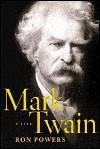
New Biography of Mark Twain

Ron Powers, Mark Twain : A Life

From Publisher's Weekly:
Starred Review. After dozens of biographies of Twain (1835–1910), one can fairly ask, "Why another?" But Powers, who wrote about Twain's Missouri childhood in Dangerous Water: A Biography of the Boy Who Became Mark Twain, early on promises "interpretive portraiture," which entails doing something that has never quite been accomplished before: presenting the totality of the man in his many moods and phases of life, including acerbic son and brother, prank-prone youth, competitive writer, demanding friend, loving husband and, eventually, globe-trotting celebrity. In doing so, Powers succeeds in validating his own assertion that Twain became "the representative figure of his times." Powers demonstrates that Twain embodied America during the tumultuous latter half of the 19th and early 20th centuries, from the divided self of the Civil War, through the unstable prosperity of the Gilded Age, to the verge of WWI. All the while, Twain asserted in both literature and life his confidence in New World progress over Old World conservatism. Unlike Twain, whose prose Powers characterizes as "wild and woolly," the biographer is lucid and direct while maintaining a steady hand on the tiller of Twain's life as it courses a twisty path as wide and treacherous as the Mississippi itself. Powers, a wise, if loquacious captain, takes us on a wonderful journey from beginning to end.
