Showing posts with label Herman Melville. Show all posts

August 5, 2025

Upcoming Conference: Melville's Legacy For Law and the Humanities, University of Cincinnati Law School, October 24-25, 2025

Upcoming Conference at the University of Cincinnati Law School, October 24-25, 2025

Melville's Legacy for Law and the Humanities


Co-sponsored by the University of Cincinnati Law School and the Law and Humanities Institute

See the website link below for a list of speakers and more information about registration. Speakers will include Brook Thomas, Richard Weisberg, Paul Finkelman, Marguerite Allen, Jenny Doctor, Sanford Levinson, and Robin West. 


https://www.lawandhumanitiesinstitute.org/events/melvilles-legacy-for-law-and-the-humanities-2

January 12, 2022

Yosifon on Moby-Dick as Corporate Catastrophe: Law, Ethics, and Redemption @DavidYosifon

David G. Yosifon, Santa Clara School of Law, is publishing Moby-Dick as Corporate Catastrophe: Law, Ethics, and Redemption in volume 90 of the University of Cincinnati Law Review (2021). Here is the abstract.
Herman Melville’s Moby-Dick serves here as a vehicle through which to interrogate core features of American corporate law and excavate some of the deeper lessons about the human soul that lurk behind the pasteboard mask of the law’s black letter. The inquiry yields an illuminating vantage on the ethical consequences of corporate capital structure, the law of corporate purpose, the meaning of voluntarism, the ethical stakes of corporate fiduciary obligations, and the role of lawyers in preventing or facilitating corporate catastrophe. No prior familiarity with the novel or corporate law is required.
Download the article from SSRN at the link.

August 26, 2019

ICYMI: Some Recent Law and Humanities Publications From Robert E. Atkinson, Jr. @FSUCollegeofLaw

ICYMI:

Robert E. Atkinson, Jr., Florida State University College of Law, has published and is publishing:

Growing Up With Scott and Atticus: Getting From "To Kill a Mockingbird" Through "Got Set a Watchman," 65 Duke L.J. Online 95 (2016).

Liberalism, Philanthropy, and Praxis: Realigning the Philanthropy of the Republic and the Social Teaching of the Church, 84 Fordham L. Rev. 2633 (2016).

A Primer on the Neo-Classical Republic Theory of the Nonprofit Sector (And the Other Three Sectors, Too), in Research Handbook on Not-For-Profit Law (Matthew Harding, ed., Edward Elgar, 2018).

Sea Captains and Philosopher Kings: "Billy Budd" as Melville's Republican Response to Plato's "Republic,"  in the Hofstra L. Rev. (forthcoming 2020).

Writer Re-Written: What Really (Might Have) Happened to Atticus and Scott, 69 Ala. L. Review 595 (2018).

November 12, 2018

McAdams and Corre on New Light on the Trial of Billy Budd

Richard H. McAdams, University of Chicago Law School, and Jacob Corre have published New Light on the Trial of Billy Budd as University of Chicago Public Law Working Paper No. 684. Here is the abstract.
We add to the extensive literature on Herman Melville’s Billy Budd, Sailor, with a careful inquiry into the legal questions it poses. Our ultimate position is that Captain Vere is neither clearly a hero nor clearly a villain. Instead, the novel embraces ambiguity by intentionally arming each side of the debate with considerable firepower, leaving readers with a quandary that would have been familiar to Herman Melville’s contemporaries, as it was parallel to the national debate over the 1842 case of the USS Somers, where the captain had ordered the summary execution of three suspected mutineers. In his influential writing on Billy Budd, Professor Richard Weisberg is correct to criticize what was, previous to him, an unreflective consensus valorizing Vere. However, Weisberg and his defenders are equally wrong to offer a one-sided attack on Vere, as if there were no case for his decision to summarily try and execute Billy Budd. To the contrary, the background history of the “Great Mutiny” of 1797, the narrator’s description of naval law and custom, and a careful analysis of the Somers case, all demonstrate that the case for Vere is as strong as the case against.
Download the article from SSRN at the link.

September 20, 2017

West In Praise of Richard Weisberg's Intransigence @GeorgetownLaw @CardozoLaw

Robin L. West, Georgetown University Law Center, has published In Praise of Richard Weisberg's Intransigence at 29 Law & Literature 21 (2017). Here is the abstract.
In early essays on Herman Melville’s Billy Budd, Sailor, Richard Weisberg startled the literary and legal academic world with a novel claim: Captain Vere, he argued, far from being a tragic hero resigned to the moral and legal necessity of an unpopular act, as he had been commonly understood, was a murderer. His summary execution of Billy Budd, Weisberg showed, was neither required, excused, nor justified by law. Rather, Vere engineered an unreviewable conviction and death sentence, contrary to both the letter and spirit of the governing positive law, for personal gain. But why was Weisberg’s claim so novel? Why was it that for seven decades, well over half a century, Vere’s villainy was so obscure, even to so many legally sophisticated readers? In this article, I argue that the obscurity of Vere’s villainy resulted from the dominant legal theories developed over the past seven decades. This, in turn, explains the novelty of Weisberg’s understanding of Vere’s character: his understanding rests on a conception of law and legal meaning distinctively outside all our received jurisprudential traditions. And it suggests a much-needed corrective, not only of our understanding of Melville’s story, but also of our conventional and critical jurisprudence. It suggests the case, more specifically, for moving our conventional legal thinking away from its focus on the unjust law, and toward the duplicitous or unjust adjudicator, and for moving our critical sensibility away from its still-dominant commitments to indeterminacy, legal skepticism, and interpretive flexibility, and toward an appreciation of the virtues of legal intransigence. In the first part of this article, I put forward an account of why it was that Richard Weisberg could see clearly what was beyond the reach to most of Billy Budd’s professional readers for the duration of the book’s life, both in law and in literature. In the second part, I turn to Weisberg’s recent defense of legal intransigence, suggesting some reasons we should attend more carefully to the case Weisberg has made for intransigence and against “flexibility” in law and jurisprudence. I then offer a couple criticisms along with a qualified endorsement of Weisberg’s brief for interpretive fidelity to positive law, informed by humane commitments to text, law, and moral rectitude.
Download the article from SSRN at the link.

July 26, 2016

Morss on Gender and Culture in International Legal Theory.

John R. Morss, Deakin University Law School, has published ‘Call Me Ahab’: On Gender and Culture in International Legal Theory. Here is the abstract.
This paper investigates the project of public international law from two directions. First from the direction of the gendered character of international law; second from the direction of international law as cultural analysis. If gendered discourse plays a role within international law it is likely to operate in a ubiquitous and a structural manner, not in ways that are entirely captured by considerations of equity and representation. The search for national identities or personalities is a quest as perverse as that of Ahab. Whether from the ’inside’ – the identity politics of the nationalist – or from the ‘outside’ – the armchair analyses of the scholar of history, of culture, or of international law – this search is in some way not yet articulated, the opposite of what we should be doing.
The full text is not available from SSRN.

April 20, 2015

Hoaxes and Frauds and Swindles, Oh, My

Some really entertaining law-related articles in the current issue (titled "Swindle and Fraud") of Lapham's Quarterly (Spring, 2015). Check out Lewis H. Lapham's "Paper Moons," David Samuels' "A Fish Tale," (about Herman Melville's literary hoax), a map of "Land Grabs" (questionable real estate), "Life Imitates Life," (a little something from Oscar Wilde), a column on Harry Houdini and more. Link to the whole fascinating issue here.

December 16, 2013

Deconstructing "Benito Cereno"

From the Chronicle of Higher Education: Greg Grandin on the historical background of Melville's Benito Cereno. Dr. Grandin is the author of the forthcoming The Empire of Necessity: Slavery, Freedom, and Deception (Metropolitan Books/Henry Holt, 2014). Here is a description of the book from the publisher's website.

One morning in 1805, off a remote island in the South Pacific, Captain Amasa Delano, a New England seal hunter, climbed aboard a distressed Spanish ship carrying scores of West Africans he thought were slaves. They weren’t. Having earlier seized control of the vessel and slaughtered most of the crew, they were staging an elaborate ruse, acting as if they were humble servants. When Delano, an idealistic, anti-slavery republican, finally realized the deception, he responded with explosive violence.
Drawing on research on four continents, The Empire of Necessity explores the multiple forces that culminated in this extraordinary event—an event that already inspired Herman Melville’s masterpiece Benito Cereno. Now historian Greg Grandin, with the gripping storytelling that was praised in Fordlandia, uses the dramatic happenings of that day to map a new transnational history of slavery in the Americas, capturing the clash of peoples, economies, and faiths that was the New World in the early 1800s. 


October 20, 2011

The Writer and the Law

John James Berry, Barry University School of Law, has published The Law, The Writer and The Work: How an Author's Interaction with the Legal System Impacts His Writing. Here is the abstract.

By tracing the lives led by four famous authors and exploring the societies which produced them, this article will show how law affects literature in ways that many readers may not notice. Rather than explore what was expressed by the author, this work will examine the affect the background of the author has on the tone of the works of literature which they produce, the affect the law and their culture's legal system had on their background, and how the characteristics of the cultures and authors reflect the characteristics of the governing legal system. Ultimately, this piece shows that, rather than a society's legal system reflecting its' underlying culture, the power of the law has the ability to shape the culture which it is supposed to serve.

Download the paper from SSRN at the link.

September 30, 2011

Philosopher Kings and Melville's Captain Vere

Rob Atkinson Jr., Florida State University College of Law, has published Averting the Captain Vere 'Veer': Billy Budd as Melville's Republican Response to Plato, as FSU College of Law Public Law Research Paper No. 539. Here is the abstract.


This article shows how Melville’s Billy Budd, rightly one of law and literature’s most widely studied canonical texts, answers Plato’s challenge in Book X of the Republic: Show how “poets” create better citizens, especially better rulers, or banish them from the commonwealth of reasoned law. Captain Vere is a flawed but instructive version of the Republic’s philosopher-king, even as his story is precisely the sort of “poetry” that Plato should willing allow, by his own republican principles, into the ideal polity. Not surprisingly, the novella shows how law’s agents must be wise, even as their law must be philosophical, if they are to do justice. Paradoxically, the novella also shows how “poetry” can save law’s agents, particularly the more Platonic, from Captain Vere’s “veer,” a dangerous turn  from fully legal justice to false and fatal severity. 


Captain Vere has a “tragic flaw” all too common among leaders otherwise completely conscientious and competent: When faced with a range of courses - all legal, moral, and practicable - Vere invariably charts the most personally painful. Part of his “no pain, no gain” course steers him into fastidious studies that exclude both “mere” fiction and “pure” theory, ironically banishing Plato himself along with his “poets.” But Vere’s own story, with its narrator’s frequent theoretical interruptions and occasional allusions to Plato, demonstrates that the reading of just such stories may deliver leaders like him from over-harsh treatment of themselves and their most vulnerable charges. The novella, then, not only reveals Captain Vere’s “veer”; it also shows a way to avert that ever dangerous, often fatal tack. If the studious captain had been prepared to study stories like his own, his readings might have made him a vastly better guardian of his symbolic flock, particularly of Billy Budd, his most innocent sheep; had “Starry” Vere been more a philosopher-king and less a surrogate father-god, he need never have made his excruciating mistake, sacrificing his most beloved foster son to save their microcosmic world.
Download the paper from SSRN at the link.

April 22, 2011

The Resistance To Disorder In "Billy Budd"

Lawrence Michael Friedman, New England School of Law, has published Law, Force, and Resistance to Disorder in Herman Melville's Billy Budd in volume 33 of the Thomas Jefferson Law Review (2010). Here is the abstract.


The Herman Melville law and literature classic, Billy Budd, Sailor (an inside narrative), illustrates the choice between force and law as means by which to achieve public order in a community. In that story, Captain Edward Fairfax "Starry" Vere believes the law leads inexorably to the determination that the sailor Billy Budd must be tried and executed for causing the death of the ship’s master-at-arms, John Claggart. Like other commentators - including Richard Weisberg and, more recently, Daniel J. Solove - I conclude that, within the context of the story, the law did not, in fact, dictate such a determination. Captain Vere had the discretion, in the circumstances, to choose between following the path of law or not. Relying upon the facts and law as Melville gives them in the story, I suggest an explanation for Vere’s actions, if not necessarily a justification: Vere, by virtue of character and temperament, had a need for order in the midst of the creeping anxiety that disorder was near at hand. Vere’s aversion to disorder both private and public precipitated his reliance upon force, rather than law, to prevent the disruption he feared might result from a failure to punish Billy for the death of the master-at-arms. This disruption may be seen as proxy for the larger currents of disorder that may disturb nearly any community. And though his decision to use force may have led to a return to the status quo condition of order on board the H.M.S. Bellipotent, the long-term impact of Vere’s decision was not quite so clear. There are lessons to be drawn from that decision about the value of adherence to the rule of law, even when such adherence may not appear to be expedient.
Download the article from SSRN at the link.

June 4, 2008

Another Interpretation of Captain Vere

Rob Atkinson, Jr., Florida State University College of Law, has published "Averting the Captain Vere 'Veer': Billy Budd as Melville's Republican Response to Plato" as FSU College of Law, Public Law Research Paper No. 311. Here is the abstract.
This article shows how Melville's Billy Budd, rightly one of law and literature's most widely studied canonical texts, answers Plato's challenge in Book X of the Republic: Show how poets create better citizens, especially better rulers, or banish them from the commonwealth of reasoned law. Captain Vere is a flawed but instructive version of the Republic's philosopher-king, even as his story is precisely the sort of poetry that Plato should willing allow, by his own republican principles, into the ideal polity. Not surprisingly, the novella shows how law's agents must be wise, even as their law must be philosophical, if they are to do justice. Paradoxically, the novella also shows how poetry can save law's agents, particularly the more Platonic, from Captain Vere's veer, a dangerous turn from fully legal justice to false and fatal severity.

Captain Vere has a tragic flaw all too common among leaders otherwise completely conscientious and competent: When faced with a range of courses - all legal, moral, and practicable - Vere invariably charts the most personally painful. Part of his no pain, no gain course steers him into fastidious studies that exclude both mere fiction and pure theory, ironically banishing Plato himself along with his poets. But Vere's own story, with its narrator's frequent theoretical interruptions and occasional allusions to Plato, demonstrates that the reading of just such stories may deliver leaders like him from over-harsh treatment of themselves and their most vulnerable charges. The novella, then, not only reveals Captain Vere's veer; it also shows a way to avert that ever dangerous, often fatal tack. If the studious captain had been prepared to study stories like his own, his readings might have made him a vastly better guardian of his symbolic flock, particularly of Billy Budd, his most innocent sheep; had Starry Vere been more a philosopher-king and less a surrogate father-god, he need never have made his excruciating mistake, sacrificing his most beloved foster son to save their microcosmic world.

Download the paper from SSRN here.

January 11, 2007

Nables on Law, Literature, and the Civil War

Deak Nabers has published Victory of Law: The Fourteenth Amendment, the Civil War, and American Literature, 1852--1867 (J. Hopkins, 2006) .

From the book description:
In Victory of Law, Deak Nabers examines developing ideas about the nature of law as reflected in literary and political writing before, during, and after the American Civil War. Nabers traces the evolution of antislavery thought from its pre-war opposition to the constitutional order of the young nation to its ultimate elevation of the U.S. Constitution as an expression of the ideal of justice -- an ideal embodied in the Fourteenth Amendment.

Nabers shows how the intellectual history of the Fourteenth Amendment was rooted in literary sources -- including Herman Melville's Battle-Pieces, Harriet Beecher Stowe's Uncle Tom's Cabin, and William Wells Brown's Clotel -- as well as in legal texts such as Somerset v. Stewart, Dred Scott v. Sandford, and Charles Sumner's "Freedom National" address. Not only were prominent writers like Ralph Waldo Emerson and Frederick Douglass instrumental in remapping the relations between law and freedom, but figures like Sumner and John Bingham helped develop a systematic antislavery reading of the Constitution which established literary texts as sources for legal authority.

This interdisciplinary study sheds light on the transformative significance of emerging legalist and constitutionalist forms of antislavery thinking on the literature of the 1850s and 1860s and the growing centrality of aesthetic considerations to antebellum American legal theory and practice -- the historical terms in which a distinctively American cultural identity was conceived.

October 3, 2005

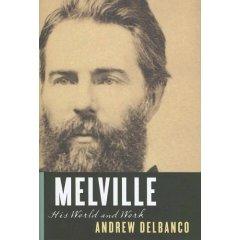
Anomaly in Delbanco's Account of the "Billy Budd" Debate

Dan Solove lists Andrew Delbanco's fine new book called Melville: His World and Work. One of the book's merits is its even-handed treatment of scholarship about Melville's works. Unfortunately, in assessing the Law-Lit debate about Billy Budd, Sailor, the author seems to this reader to privilege more traditional accounts of the tale (i.e. those justifying Captain Vere's behavior). Part of this relates to Delbanco's interpretive technique itself, e.g., p. 311: "As if some mischievous philosopher has dropped by to divert us with an epistemological riddle. Melville opens the debate over Billy's fate with a pair of rhetorical questions: 'Who in the rainbow can draw the line where the violet tint ends and the orange tint begins? Distinctly we see the difference of the colors, but where exactly does the one first blendingly enter into the other?'" In this formulation, the most important textual riddle, articulated several lines below, is omitted: "Whether Captain Vere, as the surgeon professionally and privately surmised, was really the sudden victim of any degree of aberration, every one must decide for himself by such light as this narrative may afford". Only the most authoritarian reader -- Richard Posner being among the most recent -- can avoid this inquiry or suggest, more benignly (as Prof. Delbanco does) that the story excuses Vere by making all decisions seem fraught with ambiguity. The insertion of the surgeon's doubts about Vere late in the genealogy of Melville's tale (see, e.g., The Failure of the Word, pages 145 et seq) helps shed the narrative "light" upon Vere's lawless obsession with Billy's death.

Prof. Delbanco does little with the surgeon, who privately surmised with other officers that custom and usage dictated not a drumhead court but a return to the fleet before Billy should have been tried, much less executed. Vere insists that the law requires him to hang Billy. He is wrong, and his fellow officers know this but lack the courage publicly to challenge their leader. Only the judges hand-picked by Vere courageously voice their doubts. Here, too, Prof. Delbanco's reading tilts towards Vere, as he speaks of "the judges . . . groping for some reason to defer judgment". The reasons were palpable to everyone!

The new book's account of the debate among Posner, Brook Thomas and myself will have to be judged more impartially by other readers. However, there is a troubling factual omission. on p. 384, where Prof. Delbanco reports (correctly) that Hayford and Sealts (the textual editors) ORIGINALLY argued that Melville simply did not know enough about the relevant naval law to "intend to imply that Vere was conducting an illegitimate judicial action" (emphasis provided). But later, as should be fairly well known, Sealts -- partly citing to my work --reversed his position:

"With regard to Vere's conduct of Billy's trial and execution, Hayford and Sealts [in their 1962 edition] concluded -- perhaps somewhat hastily --that Melville 'simply had not familiarized himself with statutes of the period.' 'Melville's expertise in naval law and history' must be assumed according to Richard H. Weisberg, a man trained both in literature and jurisprudence. . . [However,] Melville is inviting his reader to examine Vere's actions in the context of the story as he himself conceived it, not with strict reference to naval law and history." Merton M. Sealts, "Innocence and Infamy in Billy Budd Sailor," in John Bryant, ed., A Companion to
Melville Studies (N.Y.: Greenwood Press, 1986), 416-419, emphases in original.

The narrator explicitly asks us to judge Vere's sanity in summoning the drumhead court, in ignoring Naval usage and the covert rumblings of his fellow officers, in parrying the nervous court's own hesitation, in hanging a man beloved of the crew by suggesting they will mutiny if Billy is not hanged, in mustering the men back to work quickly after the disgraceful execution precisely to avoid that mutiny, and in violating law and custom at every turn while rigidly declaring himself bound by law and not his own natural conscience. Melville wanted this story, of course, to be for everyone, but it is now established that he knew enough of the law of the sea to be intentionally adding to the narrative "rainbow" Vere's hypocritical legal pronouncements.

Prof. Delbanco's new book, despite these qualms, must be read by all Melville enthusiasts.

September 25, 2005

New Biography of Herman Melville

Andrew Delbanco, Melville: His World and Work

A review by Michael Dirda in the Washington Post says:
In the end, perhaps the most important use of literary biography is to send us back to a writer's books with increased understanding and renewed excitement. This Andrew Delbanco certainly does for Herman Melville. We are his beneficiaries.

August 12, 2005

Melville's Billy Budd and Security in Times of Crisis

My essay, Melville’s Billy Budd and Security in Times of Crisis, 26 Cardozo L. Rev. 2443 (2005), written for a law and literature symposium at Cardozo Law School, was recently published. The symposium was held in celebration of the 20th anniversary of the publication of Richard Weisberg's The Failure of the Word. The symposium issue will be out shortly, but all the articles are now available on Westlaw and Lexis.

I’ve placed a final version of my Billy Budd essay on SSRN. Here’s the abstract:
During times of crisis, our leaders have made profound sacrifices in the name of security, ones that we later realized need not have been made. Examples include the Palmer Raids, the McCarthy Era anti-Communist movement, and the Japanese-American Internment. After September 11th, this tragic history repeated itself. The Bush Administration has curtailed civil liberties in many ways, including detaining people indefinitely without hearings or counsel. These events give Herman Melville's Billy Budd renewed relevance to our times. Billy Budd is a moving depiction of a profound sacrifice made in the name of security. This essay diverges from conventional readings that view Billy Budd as critiquing the rule of law. Instead, Billy Budd supplies us with a radical and unsettling set of insights about why our leaders often fail to do justice in times of crisis. The novella suggests that by manipulating procedure under the guise of law, Vere gives the appearance of following the rule of law, when, in fact, he is not. This is particularly illuminating, as the Supreme Court in Hamdi v. Rumsfeld has held that normal procedures required by the Due Process Clause can be modified and watered-down for enemy combatants.
This essay is a quick read for anybody interested in thinking about how Billy Budd relates to security and civil liberties.

Billy Budd Resource

For those interested in Herman Melville's Billy Budd, there's a terrific online resource to the text. It provides a complete text of the work with hyperlinks that contain illustrations, definitions of nautical and other terms, and additional resources.