In examining how badly the United States bungled its COVID-19 pandemic response, it is worth going back to the commemorations of the 100th anniversary of the 1918 flu pandemic. Author after author cautioned that the next pandemic would overwhelm the United States health system and that the demand for hospital beds, treatments, and medical staff would quickly outstrip supply. These prescient predictions from just two years ago. Why, when the risks were so obvious and so clearly understood, were they ignored? In answering that question there is blame enough to go around. The American public increasingly refused vaccines for communicable diseases, resisted spending for health research, and elected anti-science candidates. Those elected officials in turn failed to take obvious steps to ward off an entirely foreseeable disaster. Some of these developments are new(ish), relating to the specifics of the current political climate. Yet what is most striking is how readily official responses fell into virtually the same patterns that stymied effective pandemic response in 1918, and how structural racism predicted which communities would be hardest hit and least served by government responses. Instead of learning from the mistakes of the 1918 pandemic we have largely repeated them. This paper traces some of the threads of complacency, hubris, isolationism, and distrust that got in the way both times, and draws some broader lessons we must learn about American political culture before the pandemic next time.Download the article from SSRN at the link.
Showing posts with label Law and Medicine. Show all posts
Showing posts with label Law and Medicine. Show all posts
April 7, 2022
Bratspies on This Great Catastrophe: Bungling Pandemics from 1918 to Today @RBratspies @MSUILR
Rebecca M. Bratspies, City University of New York, School of Law, is publishing This Great Catastrophe: Bungling Pandemics from 1918 to Today in volume 30 of the Michigan State University College of Law International Law Review (2021). Here is the abstract.
December 12, 2017
Newly Published: Anne C. Dailey: Law and the Unconscious: A Psychoanalytic Perspective @yalepress @uconnlaw
Newly published:
Anne C. Dailey, Professor of Law, University of Connecticut, has published Law and the Unconscious: A Psychoanalytic Perspective (Yale University Press, 2017). Here from the publisher's website is a description of the book's contents.
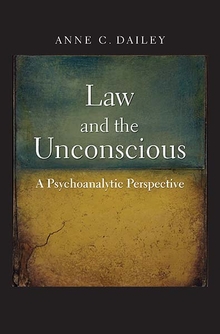
How can psychoanalysis help us understand irrational actions and bad choices? Our legal system relies on the idea that people act reasonably and of their own free will, yet some still commit crimes with a high likelihood of being caught, sign obviously one-sided contracts, or violate their own moral codes—behavior many would call fundamentally irrational. Anne Dailey shows that a psychoanalytic perspective grounded in solid clinical work can bring the law into line with the reality of psychological experience. Approaching contemporary legal debates with fresh insights, this original and powerful critique sheds new light on issues of overriding social importance, including false confessions, sexual consent, threats of violence, and criminal responsibility. By challenging basic legal assumptions with a nuanced and humane perspective, Dailey shows how psychoanalysis can further our legal system’s highest ideals of individual fairness and systemic justice.
October 18, 2017
Vaughn on Susanna Blumenthal, Law and the Modern Mind
Lea B. Vaughn, University of Washington School of Law, is publishing Book Review - (Of Susanna L. Blumenthal, Law and the Modern Mind: Consciousness and Responsibility in American Legal Culture (2016)) in volume 67 of the Journal of Legal Education (Autumn 2017). Here is the abstract.
In a masterful book titled Law and the Modern Mind, Susanna Blumenthal simultaneously describes the battles among scientists, doctors, and jurists in the period following the Revolutionary War and up through the Gilded Age, and takes on traditional scholarship in legal history as to who this person or “mind” is. Her study not only provides an alternative account of the formation of American character, but also provides a series of detailed portraits of the various turning points in the formation of that character, and the legal determination of capable, accountable personhood. This review essay initially discusses Blumenthal’s approach to legal history and the challenge she presents to traditional scholarship. The second section provides an overview of Blumenthal’s methodology, which draws on a breathtaking base of source materials; she weaves hundreds of cases, treatises, and biographical notes into her observations. Finally, this review considers what is one of the most powerful and important contributions of her book—an in-depth analysis of the intersection of law and medicine in the period under study. The review points out ways in which Blumenthal’s insights can be brought to bear on modern conversations involving law, genetics, and neuroscience.Download the book review from SSRN at the link.
May 23, 2017
Some New Articles On Hypnosis and Law
A new issue of Notes and Records: The Royal Society Journal of the History of Science is available and includes many interesting articles, including Kaat Wils' From transnational to regional magnetic fevers: The making of a law on hypnotism in late nineteenth-century Belgium and Heather Wolffram's Crime and hypnosis in fin-de-siècle Germany: the Czynski case.
Complete table of contents here.
Complete table of contents here.
May 13, 2016
Thirteenth Symposium on Law and Psychoanalysis, May 18-20, 2016
From our friend Jose Calvo Gonzalez, news of the 13th Symposium on Law and Psychoanalysis, to be held at the Universidade Federal do Parana, Curitiba, Brazil, from May 18 to the 20, 2016. Here's a link to the website.
May 4, 2016
Zwart on Transplantation Medicine, Organ-Theft Films, and Bodily Integrity
Hub Zwart, Radbout University Nijmegen, Faculty of Science, ISIS, has published Transplantation Medicine, Organ-Theft Cinema and Bodily Integrity. Subjectivity at DOI:10.1057/sub.2016.1. Here is the abstract.
Transplantation medicine affects the way we experience ourselves as embodied subjects. Human bodies become aggregates of replaceable and exploitable parts, and potential resources for craving others. Our intimate interior contains items which others subjects lack, so that organs are transformed into (commodifiable) ‘objects of desire’. Clandestine organ markets and the popularity of organ theft cinema are symptoms of this development. What does it means for human subjectivity when organs become market commodities? This contemporary issue emerges against the backdrop of a metaphysical struggle of long standing between the traditional Christian view (concerning the inviolable body) and the bio-scientific view (concerning the body as a collection of replaceable parts). I will analyse the ontological repercussions of transplantation medicine from Lacanian perspective, using organ theft cinema as a stage on which conflicting and unsettling views of embodiment are enacted, probed and questioned. Three organ theft movies (Jésus de Montréal, L’Intrus and Crank 2: high voltage) will be subjected to a Lacanian analysis. The intrusive, dehumanising dimension to organ procurement, which tends to be obfuscated (repressed) in standard bioethical discourse about voluntary donation and human dignity, resurge quite emphatically in organ transplant cinema.The full text is not available for download.
January 19, 2016
Ganz on Insanity and Responsibility in Dr. Jekyll and Mr. Hyde
Melissa J. Ganz, Marquette University Department of English, has published Carrying On Like a Madman: Insanity and Responsibility in Strange Case of Dr. Jekyll and Mr. Hyde at 70 Nineteenth Century Literature 363 (December 2015). Here is the abstract.
This essay reads Robert Louis Stevenson’s Strange Case of Dr. Jekyll and Mr. Hyde (1886) alongside medico-legal debates about the nature and scope of insanity, arguing that the novel seeks to shore up the idea of individual responsibility in Victorian society. The cognitive test of insanity that emerged from the M’Naghten case of 1843 deemed a person legally irresponsible for his acts if, due to a defect of reason resulting from mental disease, he was unable to perceive the nature and quality of his acts or to know that they were wrong. Alienists such as James Cowles Prichard and Henry Maudsley, however, argued that this test failed to acknowledge the existence of affective and volitional disorders such as moral and impulsive insanity. In their treatises, they urged judges to adopt a more permissive standard — an ‘‘irresistible impulse’’ test — that deemed accused criminals ‘‘mad’’ if they could not control their actions, even if they knew what they were doing was wrong. While the novel appears to be sympathetic to the position articulated by Prichard and Maudsley, I argue, it ultimately shows the dangers of broadening the definition of insanity. To recognize the idea of irresistible impulse as the basis of an insanity defense, Stevenson suggests, is to confound the distinctions between freedom and compulsion, deviance and disease. Contesting the use of emotional insanity to acquit educated professionals like Jekyll, Stevenson holds the doctor guilty of murder.Download the article from SSRN at the link.
December 9, 2015
Moses and Gollan on the Importance of History in Understanding the Impact of New Technologies on Law
Lyria Bennett Moses and Nicola Jane Gollan, both of the University of New South Wales, have published The Illusion of Newness: The Importance of History in Understanding the Law-Technology Interface as UNSW Law Research Paper No. 2015-71. Here is the abstract.
Despite law being a field known for its backward-looking focus on precedent, legal scholarship addressing issues associated with technology too often only looks forward. It is where legal scholarship focuses closely on a particular technology that the risk of ignoring history and the broader context is greatest. The problem, where it arises, is caused by undue focus on the newness of new technologies, and is not unique to law. There is a problematic tendency to exaggerate the newness of issues arising from technological developments. While some legal issues are truly new in that they arise for the first time as a result of a new technological activity or entity, others are simply new manifestations of issues that have arisen previously in other contexts. Even where particular issues are new in this sense, they are not necessarily limited to the particular technological context in which they first arise. Undue focus on socio-technical circumstances narrows the terms of debate. It is argued that the analysis of legal dilemmas associated with particular technologies requires a broad historical perspective that looks beyond the particular circumstances in which they arise. The paper explores three cases: social media, intellectual property, and reproductive technologies. Each case highlights the need for greater scepticism about which issues are truly new, and demonstrate some of the dangers of “over-hyping” the impact of new technologies on law.Download the article from SSRN at the link.
December 7, 2015
Lewis A. Grossman on Medical Licensing and Medical Freedom in the Gilded Age
Lewis A. Grossman, American University College of Law; Cornell Law School, has published Orthodoxy and 'The Other Man's Doxy': Medical Licensing and Medical Freedom in the Gilded Age. Here is the abstract.
This is a draft of Chapter Two of my book-in-progress under contract with Oxford University Press titled You Can Choose Your Medicine: Freedom of Therapeutic Choice in American History and Law. This chapter shows how freedom of therapeutic choice remained an influential theme in American policy and thought in the Gilded Age. Despite the almost universal restoration of medical licensing after the Civil War, the new licensing regimes were drafted and enforced in ways that protected the rights of practitioners and patients of nonorthodox schools of medicine. This chapter starts by briefly describing the main alternative medical sects during the Gilded Age, including Homeopathy, Eclectic medicine, Christian Science, and Mind Cure. It then examines the resurgence of medical licensing and shows how the continuing popular preference for freedom of therapeutic choice was reflected in the medical licensing statutes as written and implemented. The chapter considers the meaning and impact of Dent v. West Virginia, the 1889 Supreme Court case upholding medical licensing, and it explains how courts, largely as a result of this decision, played little role in guaranteeing freedom of therapeutic choice during this period. Chapter Two then explores the content of the arguments directed against discriminatory medical licensing in the Gilded Age. It discusses how these arguments were “constitutional,” even though they occurred almost entirely outside of court. The chapter considers the persistence of four strains of medical freedom rhetoric from the antebellum years (bodily freedom, economic freedom, freedom of belief, and freedom of inquiry), and it also identifies some important differences between the anti-licensing literature of the two eras. Chapter Two concludes by examining the overall political philosophy of medical freedom activists during this period, in particular the extent of their libertarianism.Download the chapter from SSRN at the link.
May 28, 2015
Law and the Body
Theodore Bennett, University of Western Australia, has published Cuts and Criminality: Body Alteration in Legal Discourse (Ashgate, 2015). Here is a description of the contents from the publisher's website.
This book investigates how and why the criminal law differentiates between different types of body alterations, with particular reference to how they are conceptualised within legal discourse. By drawing connections between types of body alteration that have traditionally been considered separately and discretely, the book allows analytical conclusions to be made about the law's treatment of the general category of 'body alteration' rather than merely about specific types of body alteration. Taking legal discourse as its analytical focus, the author critically examines a number of case studies to determine the techniques and processes by which some body alterations are discursively constructed as legitimate and legally approved, and by which other body alterations are discursively constructed as illegitimate and legally sanctioned. Specifically, the body alterations that are addressed include sadomasochistic injuries; female genital modification and male circumcision; cosmetic surgery, body modification and healthy limb amputation; and sex reassignment surgery and genital 'normalisation' surgery. International in scope, the discursive analysis in the book will be of interest to academics and researchers working in the areas of socio-legal and cultural studies.
April 14, 2015
John Harvey Kellogg and the Search For Spiritual and Physical Wellness
Indiana University Press has published:
Brian C. Wilson, Dr. John Harvey Kellogg and the Religion of Biologic Living (2014).
Here is a description of the contents from the publisher's website.
Kellogg is notable for his development and marketing of a breakfast cereal which he called Granula and later Granola. Because of a patent dispute, he later changed the name to Corn Flakes. He established a sanitorium at Battle Creek, where one of his patients was C. W. Post, who created his own line of breakfast foods. Kellogg thought that Post had pilfered the formula for his cereals from Kellogg's own recipe. Kellogg was particularly concerned about what he thought were social and individual sexual excesses, and he supported the work of such moralists and social reformers as Anthony Comstock.

Brian C. Wilson, Dr. John Harvey Kellogg and the Religion of Biologic Living (2014).
Here is a description of the contents from the publisher's website.
2014 INDIEFAB Book of the Year Awards finalist
Purveyors of spiritualized medicine have been legion in American religious history, but few have achieved the superstar status of Dr. John Harvey Kellogg and his Battle Creek Sanitarium. In its heyday, the “San” was a combination spa and Mayo Clinic. Founded in 1866 under the auspices of the Seventh-day Adventist Church and presided over by the charismatic Dr. Kellogg, it catered to many well-heeled health seekers including Henry Ford, John D. Rockefeller, and Presidents Taft and Harding. It also supported a hospital, research facilities, a medical school, a nursing school, several health food companies, and a publishing house dedicated to producing materials on health and wellness. Rather than focusing on Kellogg as the eccentric creator of corn flakes or a megalomaniacal quack, Brian C. Wilson takes his role as a physician and a theological innovator seriously and places his religion of “Biologic Living” in an on-going tradition of sacred health and wellness. With the fascinating and unlikely story of the "San" as a backdrop, Wilson traces the development of this theology of physiology from its roots in antebellum health reform and Seventh-day Adventism to its ultimate accommodation of genetics and eugenics in the Progressive Era.
Kellogg is notable for his development and marketing of a breakfast cereal which he called Granula and later Granola. Because of a patent dispute, he later changed the name to Corn Flakes. He established a sanitorium at Battle Creek, where one of his patients was C. W. Post, who created his own line of breakfast foods. Kellogg thought that Post had pilfered the formula for his cereals from Kellogg's own recipe. Kellogg was particularly concerned about what he thought were social and individual sexual excesses, and he supported the work of such moralists and social reformers as Anthony Comstock.
March 27, 2015
"Old Hickory" and a New Diagnosis
Donald Matthew Mender, Yale University School of Medicine, has published Boundary Violations of the U.S. Constitution: The Case of Old Hickory in The Neurobiology of Social Disruption: Intersectional Perspectives on Psychiatry, Pathology, and Society (Potomac Institute Press, 2015). Here is the abstract.
Object relations, the developmental neurobiology of attachment, and critical theory are enlisted in order to illuminate ways that the poorly bounded psychodynamics of dysfunctional American political leaders resonate with mass constituencies to promote public policies violating checks and balances specified by the U. S. Constitution. A case study of Andrew Jackson is used as an illustration.Download the essay from SSRN at the link.
January 2, 2015
A Laughing Matter
Cartoonist Cathy Leamy is a student in the Tufts Master of Science health communication program, where she is honing her skills and making people smile while also sending messages about good health practices. I like her take on comics and health, and for me, it doesn't take a lot to reach the "law" part. Check out Cathy's blog here.
Oh, and Happy New Year!
Oh, and Happy New Year!
November 3, 2014
The History of the Law of Suicide
Danuta Mendelson, Deakin University School of Law, and Ian Freckelton, University of Melbourne, have published The Interface of the Civil and Criminal Law of Suicide at Common Law (1194-1845) at 36 International Journal of Law and Psychiatry 343 (2013). Here is the abstract.
Download the text from SSRN at the link.
Nowadays, suicide is considered essentially a private act, although what constitutes suicide for epidemiological and even clinical purposes in not wholly resolved. Historically, however, at common law, the act of self-killing was a felony with significant religious and legal consequences that impacted upon the deceased person as well as upon his or her whole family. This article identifies the influence of Christian theology, legal theory, and social and medical developments upon attitudes to the felony of self-murder and its definition. It focuses upon what it identifies as the start of a liberalisation in more psychologically informed attitudes manifested in landmark court judgments involving exclusion clauses in insurance contracts in mid-nineteenth century England. The article illustrates that the law in respect of socially controversial matters neither necessarily develops in a linear progression, nor accurately reflects public sentiments. More specifically, it describes an ongoing definitional conundrum with suicide – whether it should be designated as committed by persons of significantly impaired mental state. It observes that in spite of reform to the criminal law of suicide, the civil law relating to suicide has continued to be characterized by ambivalence, ambiguity and significant vestiges of counter-therapeutic moralizing.
Download the text from SSRN at the link.
March 27, 2013
Law and Trauma, Seen Through Graphic Novels
Karen Crawley, Griffith Law School, and Honni Van Rijswijk, University of Technology, Sydney, have published Justice in the Gutter: Representing Everyday Trauma in the Graphic Novels of Art Spiegelman. Here is the abstract.
Scholars working at the intersection of law and trauma have often turned to literature to supplement the law’s version of justice. In this article, we consider what the unique formal properties of comics – which we refer to here as graphic novels – might bring to this pursuit, by reference to Art Spiegelman’s Maus (1996) and In the Shadow of No Towers (2004). We suggest that these two works offer a critique of the underlying model of trauma upon which law relies, suggesting alternative understandings of trauma in a mode which is particularly instructive for law. Although Spiegelman organizes his treatment of trauma through specific events that have defined the twentieth and twenty-first centuries – the Holocaust and 9/11 – he represents the impact, as well as the ethical and aesthetic questions of these experiences, in ways that radically challenge the supremacy of the event by showing the ways in which the event fails to be contained.Download the paper from SSRN at the link.
May 15, 2012
Conference On Law and Psychoanalysis
An announcement of a conference on law and psychoanalysis, to be held from May 16 to May 18, at the Universidade Federal do Parana (Brazil). Information from our colleague Dr. José Calvo González.

April 23, 2012
Very Assisted Insemination
Kara W. Swanson, Northeastern University School of Law, has published Adultery by Doctor: Artificial Insemination, 1890–1945, at 87 Chicago-Kent Law Review 591 (2012). Here is the abstract.
Download the article from SSRN at the link.
In 1945, American judges decided the first court cases involving assisted conception. The challenges posed by assisted reproductive technologies to law and society made national news then, and have continued to do so into the twenty-first century. This article considers the first technique of assisted conception, artificial insemination, from the late nineteenth century to 1945, the period in which doctors and their patients worked to transform it from a curiosity into an accepted medical technique, a transformation that also changed a largely clandestine medical practice into one of the most pressing medicolegal problems of the mid-twentieth century. Doctors and lawyers alike worried whether insemination using donor sperm was adultery by doctor, producing illegitimate offspring. Drawing upon the legal and scientific literatures, case law, popular sources and medical archives, I argue that insemination became identified in medicine and law as a pressing problem at mid-century after decades of quiet use because of the increasing success of the technique, increasing patient demand, and increasing use -- three interrelated trends that led to increasing numbers of babies whose origins were “in the test tube.” In examining the history of a medical procedure becoming a legal problem, I also trace the development of a medical practice in the face of legal uncertainty and the shifting control of the medical profession over assisted conception. I argue that doctors modified the way they treated patients in response to perceived social and legal condemnation of artificial insemination, keeping tight control over all aspects of the procedure, but that doctors’ persistence in meeting patient demand for fertility treatments despite such condemnation helped make artificial insemination into a medicolegal problem. Once it became identified as a medicolegal problem, artificial insemination became the subject of a broad social discussion, in which medical voices did not receive automatic deference, and medical control was challenged.
May 26, 2011
The History of Hysteria, In Photographs
NPR's Jessica Loudis takes a look at Asti Hustvedt's Medical Muses: Hysteria in Nineteenth Century Paris, a new book examining the women confined to the notorious Salpetriere Hospital in Paris, the treatment of their condition, which was dubbed "hysteria," and the effects and stories about that threatment then and now. Says Ms. Loudis in part,
Nowhere was hysteria's uneasy relationship to science more apparent than in photographs. Andre Breton once called hysteria the "greatest poetic discovery of the late 19th century," a notion that lingers below the surface of clinical observation. Like Muybridge's images of horses in motion, Charcot used photography as a mode of forensics and a means to parse illness. For the neurologist, a lifelong doodler, "art became a method to immobilize the tumultuous fits of his patients and order the savage thrashing into a sequence of static images." It's no coincidence that "Augustine," Charcot's most documented hysteric, arrived at the hospital in 1875, the same year that its first darkroom was installed. But more than a century later, these photos — many of which have the macabre look of a still from a Bela Lugosi film — are in no way native to the realm of medicine. Instead, Hustvedt uses them to highlight the historically foggy divide between science and art.More here. The book is published by Norton.
March 28, 2011
UCLA Conference On Pedro Almodovoar
UCLA's New Center for Psychoanalysis is hosting a conference devoted to the films of Pedro Almodovor, Mirrors of the Heart: The Films of Pedro Almodovar. It takes place April 16. Says coordinator Dr. Thomas Brod, "These films are like dreams...There's anxiety in small measures, and you're always in identification with the characters, no matter what they're doing. It's open to all sorts of possibilities. The visual qualities are so exciting, and there's plenty to chew on psychoanalytically. So we like to have psychoanalysts from many different kinds of theoretical perspectives discussing it."
While the experts at this conference don't seem to have the intersection of psychoanalysis and law directly in their sights, I would think that that intersection would be interesting to examine, particularly considering Mr. Almodovor's subjects. Notes another speaker, Dr. Sandra E. Fenster, at the upcoming conference, "Voyeurism, blackmail, unconscious fantasy, early relationships that persist in an adult's mind -- his films really capture that." She will be discussing the film Broken Embraces (2009) "to illustrate obsessive love triangles and jealous revenge."
Last year's conference centered on Charlie Kaufman (Being John Malkovich, Eternal Sunshine of the Spotless Mind).
While the experts at this conference don't seem to have the intersection of psychoanalysis and law directly in their sights, I would think that that intersection would be interesting to examine, particularly considering Mr. Almodovor's subjects. Notes another speaker, Dr. Sandra E. Fenster, at the upcoming conference, "Voyeurism, blackmail, unconscious fantasy, early relationships that persist in an adult's mind -- his films really capture that." She will be discussing the film Broken Embraces (2009) "to illustrate obsessive love triangles and jealous revenge."
Last year's conference centered on Charlie Kaufman (Being John Malkovich, Eternal Sunshine of the Spotless Mind).
February 28, 2011
A "Mad Scientist" For Real? And In a Movie?
The Scientist features Jim Fields' documentary about neurologist Robert White, who died last year. Mr. Fields notes that Dr. White might fall into the class of the "real" "mad scientist," someone whose thoughtful integration of research and imagination led him toward the boundaries of what we now consider commonplace. But he did some unusual things in the lab, too--things we still consider odd, and maybe off-limits, such as grafting one monkey's head onto another body.
Bioethicists Will Gaylin and Dan Callahan, who co-founded bioethics think tank, The Hastings Center, in 1969, remember talk of brain transplantation when organ transplant technology was developing. "It used to be kind of a joke," says Callahan. "If you transplant my brain into somebody else's head, who would that person be? Is a person the brain or the body?"
....
"Real mad scientists...are not lone wolves like in the movies," says Fields. "They're doing things that are sanctioned in their time and place, in society, that are only considered by later values to be wrong."
...
While Callahan doubts that White would have been allowed to do this research today, he notes that he likely received approval from a number of organizations in his day. But does that context of permission make his actions ethical? "I don't think you can go back and prejudge generations of people," says Gaylin, "but by the time he was doing his research, there were a significant number of people talking about medical ethics in an advanced form."
So which is it? Was White a researcher outside the boundaries of bioethics or a man doing right by the standards of his time?
Subscribe to:
Posts (Atom)

 Posts
Posts



