This article examines the use of courtroom dialogues in two of the leading works of Irish language literature, and how they acted, at the time of their writing, as a mechanism which permitted both author and audience to question societal attitudes to female agency and sexuality – and how they continue to facilitate such critical reflection contemporaneously. Specifically, the piece examines the use of courtroom dialogues in Cúirt an Mheán Oíche by Brian Merriman (CMO) written around 17802 and in An Triail by Máiréad Ní Ghráda (AT) originally performed in 1965 and published in 1978. Both pieces, written nearly two centuries apart, use courtroom dialogues, and the formal mechanisms of testimony and cross-examination to articulate and critique the social subordination of women portrayed in the texts, and to question the restraints on female agency and sexuality imposed by the societies in which their characters exist. Through the works’ use of judicial settings and dialogues both texts articulate a feminist theory of law which aligns with Catherine McKinnon’s dominance theory.N.B. SSRN indicates the article is not available for download but the author indicates it is available open access. The website shows the content might be available for purchase or through institutional subscription.
Showing posts with label Trials in LIterature. Show all posts
Showing posts with label Trials in LIterature. Show all posts
September 21, 2022
Costello on Courtroom Dialogues and Feminist Legal Theory in Irish Literature
R. A. Costello, Dublin City University, School of Law and Government, has published Courtroom Dialogues and Feminist Legal Theory in Irish literature at 20 Irish Studies Review 370 (2020). Here is the abstract.
September 16, 2018
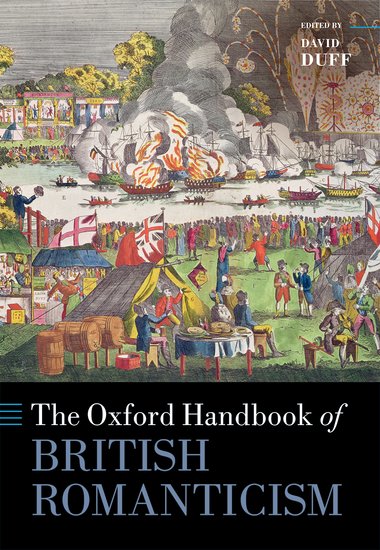
Myers on Victorian Trial Literature in the Oxford Handbook of British Romanticism @ArsScripta @OxUniPress
Victoria Myers has published Trial Literature in The Oxford Handbook of British Romanticism 294 (David Duff, ed., OUP, 2018).
December 7, 2016
Lizzie Borden's Back...With a Vengeance
The Guardian takes a look at the enduring interest with Lizzie Borden and the events of August 4, 1892, as new popular culture entries, including a film, a novel, and a musical focus on the enigmatic Massachusetts woman who may have been the U.S.'s ultimate daddy's girl. More here.
April 14, 2016
Literary Trials
New from Bloomsbury:
Literary Trials: Exceptio Artis and Theories of Literature in Court (Ralf Gruettemeier, ed., 2016).
Here is a description of the contents from the publisher's website.

Literary Trials: Exceptio Artis and Theories of Literature in Court (Ralf Gruettemeier, ed., 2016).
Here is a description of the contents from the publisher's website.
From the 19th century onwards, famous literary trials have caught the attention of readers, academics and the public at large. Indeed it is striking that more often than not, it was the texts of renowned writers that were dealt with by the courts, as for example Gustave Flaubert's Madame Bovary and Charles Baudelaire's Les Fleurs du Mal in France, James Joyce's Ulysses and Henry Miller's Tropic of Cancer in the US, D.H. Lawrence's Lady Chatterley's Lover in Great-Britain, up to the more recent trials on Klaus Mann's Mephisto and Maxim Biller's novel Esra in Germany.
By bringing together international leading experts, Literary Trials represents the first step towards a systematic discussion of literary trials on a global scale. Beginning by first reassessing some of the most famous of these trials, it also analyses less well-known but significant literary trials. Special attention is paid to recent developments in the relationship between literature and judicature, pointing towards an increasing role for libel and defamation in the societal demarcation of what literature is, and is not, allowed to do.
rom
the 19th century onwards, famous literary trials have caught the
attention of readers, academics and the public at large. Indeed it is
striking that more often than not, it was the texts of renowned writers
that were dealt with by the courts, as for example Gustave Flaubert's Madame Bovary and Charles Baudelaire's Les Fleurs du Mal in France, James Joyce's Ulysses and Henry Miller's Tropic of Cancer in the US, D.H. Lawrence's Lady Chatterley's Lover in Great-Britain, up to the more recent trials on Klaus Mann's Mephisto and Maxim Biller's novel Esra in Germany.
By bringing together international leading experts, Literary Trials represents the first step towards a systematic discussion of literary trials on a global scale. Beginning by first reassessing some of the most famous of these trials, it also analyses less well-known but significant literary trials. Special attention is paid to recent developments in the relationship between literature and judicature, pointing towards an increasing role for libel and defamation in the societal demarcation of what literature is, and is not, allowed to do. -

By bringing together international leading experts, Literary Trials represents the first step towards a systematic discussion of literary trials on a global scale. Beginning by first reassessing some of the most famous of these trials, it also analyses less well-known but significant literary trials. Special attention is paid to recent developments in the relationship between literature and judicature, pointing towards an increasing role for libel and defamation in the societal demarcation of what literature is, and is not, allowed to do. -
March 17, 2016
Dunne On Shakespeare, Revenge Tragedy, and Early Modern Law
Derek Dunne has published Shakespeare, Revenge Tragedy and Early Modern Law (Palgrave Macmillan, 2016). Here is a description of the contents from the publisher's website.
Revenge tragedies are filled with trial scenes, miscarriages of justice and untrustworthy evidence, yet this is the first study to explore how the revenge plays of Kyd, Shakespeare and others critically engage with their legal system. Featuring groups of citizens taking the law into their own hands, revenge tragedies stage a participatory justice of their own, which problematises the progress of English common law during this crucial phase of English legal history. By connecting English revenge tragedies to major crises within the legal system including the erosion of trial by jury (Titus Andronicus), food riots in the 1590s (Antonio's Revenge), and debates over royal prerogative (The Revenger's Tragedy) a persistent legal critique is revealed to be at work. The book also offers a major new reading of Hamlet that argues against the play's engagement with law, in contrast to the radical socio-legal commentary identified in other revenge plays. Revenge tragedy can thus be understood as an index of early modern citizens' fractious relationship with their law.

Subscribe to:
Posts (Atom)

 Posts
Posts



