This paper examines the growing use of rap lyrics as evidence in criminal proceedings and argues that such practices reflect a fundamental misunderstanding of Black creative expression. Drawing on Critical Race Theory, this paper demonstrates how courts disproportionately interpret rap lyrics as literal confessions rather than artistic works, reinforcing racial bias and undermining fair trial principles. The analysis further contends that this mischaracterization exposes a gap within U.S. intellectual property law, which fails to adequately protect the contextual and expressive nature of lyrical content when it is removed from its artistic framework and repurposed as evidence. By treating rap lyrics differently from other forms of creative expression, courts effectively erode both First Amendment protections and the underlying principles of copyright law. This paper proposes a re-evaluation of evidentiary standards and calls for intellectual property law reform that recognizes rap lyrics as protected creative works, requiring courts to account for artistic context before admitting such material as evidence. In doing so, it advances a broader framework for protecting Black creativity within the legal system.Download the article from SSRN at the link.
Showing posts with label Rap Lyrics. Show all posts
Showing posts with label Rap Lyrics. Show all posts
May 22, 2026
Little on Protecting Black Creativity: Rap Lyrics as Misused Evidence and the Case for Intellectual Property Law Reform
Shathera Little, Protecting Black Creativity: Rap Lyrics as Misused Evidence and the Case for Intellectual Property Law Reform. Here is the abstract.
July 2, 2024
Conklin on The Admissiblity of Rap Lyrics in Court: A Review of As We Speak
Michael Conklin, Angelo State University; Texas A&M School of Law, is publishing The Admissibility of Rap Lyrics in Court: A Review of As We Speak in the Journal of Law & Social Deviance. Here is the abstract.
The use of rap lyrics at trial is a timely issue given the current confluence of events, including the Young Thug trial, the Black Lives Matter movement, a growing “tough on crime” sentiment due to rising violent crime, the introduction of the Restoring Artistic Protection (RAP) Act in Congress, and societal debate about separating the artist from the art. This review provides a critical analysis of the 2024 documentary As We Speak: Rap Music on Trial, a film that advocates against the use of rap lyrics as evidence in criminal trials. The cinematography is beautiful, creating an aesthetically pleasing experience. And it is engagingly structured as a road movie with the guide, rapper Kemba, taking the viewer to Chicago, Atlanta, Los Angeles, New York City, and London to interview rappers and legal experts. This results in a powerful documentary that has received glowing reviews from both film critics and audiences. Unfortunately, while the film’s subject is certainly a legitimate topic of discussion, the film suffers from significant shortcomings. This review will analyze how the leading study regarding rap on trial is deceptively presented, misrepresentations of the topic as a free-speech issue whereby rap lyrics are “criminalized,” ineffective attempts to analogize rappers to Shakespearian actors, and claims regarding race that are contrary to the evidence.Download the article from SSRN at the link.
November 21, 2023
Litt on From Rhyming Bars to Behind Bars: The Problematic Use of Rap Lyrics in Criminal Proceedings @LucyJLitt @UMKCLawReview
Lucy J. Litt, Harvard Law School, has published From Rhyming Bars to Behind Bars: The Problematic Use of Rap Lyrics in Criminal Proceedings at 92 UMKC L. Rev. 121 (2023). Here is the abstract.
The use of rap lyrics as evidence in criminal proceedings distorts the art form and heightens the risk of wrongful prosecutions. Rap music is complex and sophisticated; it is an art form with its own history, norms, and conventions. Like other art forms (e.g., spy novels by John le Carré; ballets by George Balanchine; the Big Apple Circus; Shakespeare’s tragedies; Marvin Hamlisch and Edward Kleban’s “A Chorus Line;” or songs by Johnny Cash), 1 it serves as a creative outlet and can be a form of critical public commentary. Rap is an art form that often distorts or exaggerates reality. Unlike other fictional art forms (e.g., murder mysteries, TV crime show scripts), however, prosecutors increasingly introduce rap lyrics as evidence in criminal proceedings, where the real-life stakes can be very high. In 1987, the Washington Court of Appeals considered, and denied, the admissibility of violent writings as evidence; however, courts did not consider the specific question of rap lyrics until the United States Court of Appeals for the Seventh Circuit heard United States v. Foster in 1991 and concluded that the rap lyrics in question were admissible as evidence against the defendant rap artist. In the years since 1991, state and federal prosecutors have continued their practice of introducing rap lyrics and rap music videos in criminal proceedings against rappers(and even sometimes their friends and fans). Scholars and commentators who focus on these practices refer to the phenomenon as “rap on trial.” The courts vary in their decisions regarding rap on trial, with most courts and prosecutors having persistently failed to grapple with the complexity of the issues presented by its use. Troublingly, in the ensuing three decades, prosecutors, judges, and others in the legal profession have not sufficiently scrutinized the reliability of rap lyrics and the constitutional issues inherent in their misuse, in spite of studies that have shown that the introduction of rap lyrics as evidence infuses a heightened likelihood of unfair prejudice into the criminal legal process. Rap is a form of creative expression that was predominantly cultivated by Black and Brown men, and it has its origins in marginalized urban areas. The art form and its creators often invoke unsupportable negative stereotypes among jurors, and even judges. Prior legal and interdisciplinary scholarship, by experts such as Professors Andrea L. Dennis and Erik Nielson, has addressed the practice of, and problems presented by, “rap on trial.” Social science scholarship, such as Stanford University Sociology Professor Forrest Stuart’s Ballad of the Bullet, has explored the culture surrounding rap music and how that culture comes into tension with racially biased law enforcement and uninformed members of the general public. The scholarship that exists in this area tends to draw upon the convergence of these issues to propose holistic approaches to proposed reforms. This paper challenges prosecutors’ use of rap lyrics (and, by extension, rap music videos) as evidence against defendants in criminal legal proceedings: this practice often violates and undermines fundamental values of the United States justice system, the rules of evidence, and the Constitution; the practice also threatens to harm defendants, their loved ones, and their communities.Download the article from SSRN at the link.
October 24, 2023
Casini on Addressing the Use of Rap Lyrics as Criminal Evidence @KCEsq @QuinnipiacLaw
Kevin Casini, Qiunnipiac University School of Law, has published Addressing the Use of Rap Lyrics as Criminal Evidence. Here is the abstract.
The judicial bias against rap music is a growing contributor to systemic racism that must be ended before it causes any more damage. Whether because of personally held beliefs, latent cultural insensitivity, or a win-at-all-costs prosecutorial approach to criminal trials that promotes an appeal to those traits in jurors, prosecutors should be bound from using the Constitutionally protected speech and expression in rap lyrics as evidence against criminal defendants. At an increasing frequency, courts across the country are making it known that they have no problem using a rapper’s lyrics against them in a criminal case. This practice is particularly egregious, not only because of its chilling effect on creativity but because it is specifically targeted against rap music and rap music alone; in other words, it is a practice targeted against Black defendants. Congress now needs to enact law expressly upholding, again, freedom of expression, and preventing that expressive speech from being weaponized against the communities that rely on it to express themselves, to tell the stories of their communities, and to create, and recreate, identity.Download the article from SSRN at the link.
June 2, 2020
Conklin on The Extremes of Rap on Trial: An Analysis of the Movement to Ban Rap Lyrics as Evidence (Book Review) @AngeloState
Michael Conklin, Angelo State University, has published The Extremes of Rap on Trial: An Analysis of the Movement to Ban Rap Lyrics as Evidence, at 95 Indiana L. J. The Supplement 1 (2020). Here is the abstract.
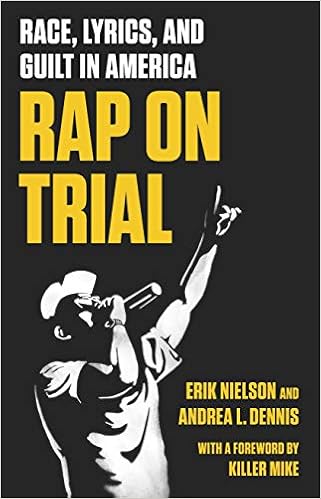
This Article is a review of Rap on Trial: Race, Lyrics, and Guilt in America. The book largely focuses on the dangers of allowing rap lyrics to be presented as evidence in criminal trials. The authors posit that the fictitious and hyperbolic nature of rap lyrics are misrepresented by prosecutors as autobiographical confessions that document illegal activity and violent character traits of defendants. The authors compare rap to other musical genres and conclude that racism is the underlying cause for why the genres are treated differently in court. The authors also advocate for evidence nullification and argue for a complete ban on all rap-related evidence at trial. This Article assesses both the strengths and weaknesses of the evidence presented to support these claims. Furthermore, this Article discusses pragmatic issues such as how the author’s advocacy for their more extreme proposals may be counterproductive to enacting their more reasonable proposals.Download the article from SSRN at the link.
Subscribe to:
Posts (Atom)

 Posts
Posts



