April 23, 2015

A New Book On Magna Carta From Cambridge UP

Robert Hazell and James Melton are the editors of Magna Carta and its Modern Legacy (Cambridge University Press), planned for release, April 2015. Here's a description of the contents from the publisher's website.

Magna Carta is celebrated around the world as a symbol of limited government and constitutionalism. But in 1215 Magna Carta was a failure, abrogated within months. Why then do we celebrate this piece of parchment? To mark the 800th anniversary this book brings together top scholars from the UK, US and Australia to answer this question and analyse Magna Carta's historic and contemporary influence. Using a political science framework, Magna Carta and its Modern Legacy draws from scholarship on influence and constitutional design to explain how parchment can contain executive power. Individual chapters on Britain discuss such topics as socioeconomic rights in Magna Carta; Magna Carta and the British constitution; and public understanding of the charter. Internationally focused chapters look at Magna Carta and jury trial in America, slavery in the Caribbean, court delays in the Pacific, the proportionality principle, and judicial supremacy. 


 Magna Carta and its Modern Legacy

Early Soviet Property Rights Theory

Boris N. Mamlyuk, University of Memphis School of Law, has published Early Soviet Property Law in Comparison with Western Legal Traditions in Political Economy and Law: A Handbook of Contemporary Practice, Research and Theory (Ugo Mattei and John Haskell, eds.; Edward Elgar, 2015). Here is the abstract.

This chapter is an attempt to put early Soviet property rights theory into conversation with property rights theories in various Western legal traditions, and to bracket that discussion within more foundational critiques of legal formalism. This is important not just because of the endurance of various socialist property regimes to this day, but also because unlocking shared ontological, political or ideological commitments in two nominally-opposed theoretical contexts can help us understand the actual normative stakes in these deliberations, and thus, shed light on the deeper institutional contours of property reforms by identifying previously overlooked actors, interests, and pathways of governance. The chapter starts with a heuristic mapping of several theoretical moorings for property rights in the Western legal tradition and attempts to problematize the formalist claim that property law regimes are relatively autonomous/internally constituted. It then examines early Soviet critiques of formalism and their remarkable ‘anti-formalist formalist’ argumentative logic. Following recent research that shows the deep embeddedness of private right as a default assumption in both Soviet and Western legal thinking, the chapter lays out several intuitions regarding the ideological and political functions that are served by the recognition of formal individual property rights regimes in socialist and liberal societies, including: (1) the reification of the individual as a primordial legal actor; (2) promotion of individualism in socialist societies and collectivism in liberal societies as an affective dimension of bipolarity; (3) instrumentalisation of private rights to occlude class conflicts or channel distributional conflicts towards particular institutional forms of dispute settlement. These themes are directly relevant to ongoing policy debates over the role of strong and clear property rights as prerequisites for economic growth not only in the context of various post-socialist ‘transitions’ but also globally.
Download the essay from SSRN at the link.

April 22, 2015

Images and Imagination in Theorizing About Law: A Workshop at Wolfson College, Oxford

From Maksymilian Del Mar, Queen Mary College, University of London, news of a workshop on images in legal scholarship, to take place at Wolfson College, Oxford, on May 20, 2015. Here's a description. If you are interested, sign up soon: only a few spots are left.


Images and Imagination in Theorizing about Law Workshop

20 May 2015

Time: 10:30am - 7:00pm 
Venue: Haldane Room, Wolfson College, Linton Road, Oxford, OX2 6UD

This one-day workshop will examine the role of images in legal scholarship, both theoretically and historically. By bringing together legal and art history academics, it will establish a new network of scholars from a variety of disciplines—art, history, law, anthropology—interested in the intersection of images and law.

The last decade has seen much research into the intersection of the visual and the legal, yet the impact on the practice of contemporary legal scholarship has been limited, and there is little methodological reflection on the roles that images and imagery have played in scholarship about law.

For the first time in the UK, this workshop will explore these issues with legal scholars, art historians, art theorists, visual epistemologists, anthropologists, and explore future avenues of research.
This workshop is co-organised by Professor Sionaidh Douglas-Scott (Oxford) and Dr Maks Del Mar (Queen Mary).
Participants
o    Dr Carolin Berhmann (Kunsthistorisches Institut in Florenz)
o    Professor Denis Galligan (Oxford)
o    Professor Adam Gearey (Birkbeck)
o    Professor Peter Goodrich (Cardozo)
o    Dr Maks Del Mar (Queen Mary)
o    Professor Marie Laure Mathieu (Montpellier)
o    Professor Fernanda Pirie (Oxford)
o    Professor Geoffrey Samuel (Kent)
o    Dr Clare Sandford-Couch (Northumbria)
o    Professor Mathias Siems (Durham)
o    Ms Sophie Arkette (Artist in residence, Cambridge)
o    Dr Thomas Giddens (St Mary’s)
Programme
10:30–11:00 Tea and Coffee
11:00–12:00 Keynote speaker
Dr Carolin Berhmann, Kunsthistorisches Institut in Florenze
Title: ‘Nomos of Images
12:05–1:05 Keynote speaker
Dr Clare Sandford-Couch
, Northumbria University
Title: ‘Images and Legal Authority in Fourteenth Century Florence
1:05–2:00 Lunch
2:00–4:30 Short presentations with breaks
Panel 1
Dr Patricia Cain
, Artist
Title: ‘Practices of Thinking: Law and Art
Ms Sophie Arkette, Leverhulme Artist-in-Residence, Centre for Intellectual Property & Information Law, University of Cambridge
Title: ‘Appearance v Materiality: On the Nature of Fixation in UK & Dutch Copyright Law
Professor Amanda Perry-Kessaris, Kent Law School
Title: ‘Graphic Legal Interdisciplinarity

Panel 2
Professor Fernanda Pirie
, Oxford University
Title: ‘Visual Regularity in Tibetan Legal Documents
Professor Geoffrey Samuel, University of Kent
Title: ‘The Use of Images in Legal Reasoning
Dr Thomas Giddens, St Mary’s University, Twickenham
Title: ‘Comics and Legal Aesthetics: Navigating the Limits of Rational Text with Graphic Fiction

Panel 3
Professor Denis Galligan
, Oxford University
Title: ‘On Trial for Treason: The Unlikely Alliance of John Lilburne and Edward Coke
Professor Adam Gearey, Birkbeck, University of London
Title: ‘Once Poor Always Poor: Images of Law and Poverty in George Orwell’s “The Road to Wigan Pier”
Professor Mathias Siems, Durham University
Title: ‘Mapping Law Visually

Panel 4
Professor Sionaidh Douglas-Scott
, Oxford University
Title: TBA
Dr Maks Del Mar, Queen Mary University of London
Title: ‘Visualising the Common Law Tradition
4:30–5:00 Tea and Coffee
5:00–6:00 Keynote speaker
Professor Marie-Laure Mathieu
, University of Montpellier
Title: ‘Images in Legal Reasoning
6:00–7:00 Keynote speaker
Professor Peter Goodrich
, Benjamin N Cardozo School of Law
Title: ‘Imago Decidendi- Pictures as Precedents
7:00 Closing remarks

How to book

To reserve your place, please visit The Foundation for Law, Justice and Society website.

Here is a registration link: www.fjls.org/images-and-law

____________________________________

Senior Lecturer in Law and Philosophy

Academic Fellow (2013-16), The Honourable Society of the Inner Temple

Department of Law, Queen Mary, University of London

Mile End Road, London, E1 4NS, United Kingdom

Tel: +44 20 7882 3962; Fax: +44 20 7882 7042

The Impact of Alan R. Bromberg's Treatise on Securities Fraud

Wendy Gerwick Couture, University of Idaho College of Law, is publishing Professor Alan R. Bromberg and the Scholarly Role of the Treatise in the Southern Methodist University Law Review. Here is the abstract.

This essay is part of a symposium edition honoring the scholarly contributions of SMU Distinguished Professor Alan R. Bromberg. This essay focuses on the unique scholarly role of his treatise on securities fraud, which he first published as a single volume in 1967. In 1979, Lewis D. Lowenfels joined Professor Bromberg as a co-author, and in 2012, Michael J. Sullivan joined as a second co-author. Now, 48 years after the first volume was published, the treatise, re-titled Bromberg and Lowenfels on Securities Fraud, has reached eight volumes in length. The treatise has been cited nine times by the Supreme Court and extensively by lower courts and other scholars.

Treatises currently play a somewhat controversial role within legal scholarship. Historically, the writing of treatises was closely tied with American legal education. More recently, however, numerous scholars have documented the decline of treatise-writing by law professors, citing the rise of the realist movement and the waning prestige of treatises among legal academics. In addition, treatises often influence in the shadows, consulted but not cited by practitioners and courts. Finally, a treatise is uniquely ephemeral, with early insights lost as the treatise is updated to reflect primary authority, with the treatise’s role in shaping that authority lost in the process.

Against this backdrop, this essay argues that Professor Bromberg’s and his co-authors’ treatise on securities fraud demonstrates the important role that treatises can continue to play within legal scholarship. This essay revisits earlier versions of the treatise to identify factors that led to its importance and to trace its influence in shaping the modern law of securities fraud. In particular, Professor Bromberg created his treatise when securities fraud jurisprudence was in a dynamic state, and he promoted clarity by creating an interpretive framework and providing guidance therein. The treatise was thus poised to exert influence at pivotal moments in the development of securities fraud doctrine, such as in the creation of the widely-applied Cammer factors, and to serve as a springboard for other scholarly contributions.

Download the essay from SSRN at the link.

Assessing and Documenting Outsider Jurisprudence: The LatCrit Example

SpearIt, Texas Southern University, Thurgood Marshall School of Law, has published Foreword: From Latcrit to Latcrit 2.0 -- Institutionalizing a Movement and Cultivating Next-Generation Scholarship at 47 John Marshall Law Review (2014). Here is the abstract.

This essay is the foreword to the LatCrit 2013 symposium. It charts the evolution of the LatCrit movement into an institution and documents efforts at cultivating outsider jurisprudence; it also introduces the essays of in symposium.

Download the essay from SSRN at the link.

The New Deal and State Constitutional Law

Keith E. Whittington, Princeton University, Department of Politics, is publishing State Constitutional Law in the New Deal Period in the Rutgers Law Journal. Here is the abstract.

The 1930s is generally understood to be a period of constitutional revolution in the United States, with a restrictive conservative U.S. Supreme Court giving way to a latitudinarian liberal Court. The politics of judicial review and the substance of constitutional law in the states has rarely been considered. This article begins to integrate the states into the broader story of American constitutional development in these pivotal years. Focusing on a sample of four state courts between 1925 and 1945, this article argues that the U.S. Supreme Court and the struggle over federal constitutional law may have been more idiosyncratic and exceptional than typical of the constitutional politics of the period. Judicial review in the state courts and the elaboration of state-level constitutional law are characterized by continuity rather than transformation during this period. State courts were able to routinely use the power of judicial review to invalidate legislation across this time period, but they rarely found themselves obstructing the core policies being advanced by the other parts of the state governments.
 Download the article from SSRN at the link.

The Copyright Law and Competing Moral Claims

Dan Hunter, Swinburne Law School & New York Law School, and Nicolas Suzor, Queensland University of Technology Faculty of Law, have published Claiming the Moral High Ground in the Copyright Wars in Copyfight: Talking About Copyright (P. McGuinness, ed.; Sydney: NewSouth, 2015). Here is the abstract.

Of all the reasons given to strengthen copyright law, the one that seems strongest is the moral argument by musicians, authors, artists and other creators that the internet is taking away their livelihood. But from the perspective of the national interest, the current set of proposals, globally, to shift the responsibility for enforcing copyright to intermediaries are bad ideas. Harming the communications infrastructure is a bet against the future – and against those newly emerging creators who don’t follow the model of the past. In this chapter of an edited collection of works about disputes over copyright, we examine the nature of the moral claims by various actors within the copyright system.

Download the essay from SSRN at the link.

"Better Call Saul's" Legal Ethics

Nicole Hyland on the legal ethics of Better Call Saul, here at Legal Talk Network.

April 21, 2015

Attention, Future Lawyers

The Guardian has published a reader-selected list of the books those aspiring to a legal career should read. Choices include tomes on what the law is (Tom Bingham's The Rule of Law) how to become a lawyer (Nicholas McBride's Letters to a Law Student), critiques of the legal system (Helena Kennedy's Eve Was Framed) and what the law means, viewed through literature's prism (Charles Dickens' Bleak House).

European and U. S. Influences on Latin American Administrative Law

Ricardo Perlingeiro, Universidade Federal Fluniense (UFF), has published A Historical Perspective on Administrative Jurisdiction in Latin America: Continental European Tradition versus US Influence. Here is the abstract.

From the perspective of US influence, this text analyses the history of administrative jurisdiction, starting from the 19th Century, in the 19 Latin American countries of Iberian origin (Argentina, Bolivia, Brazil, Chile, Colombia, Costa Rica, Cuba, Ecuador, El Salvador, Guatemala, Honduras, Mexico, Nicaragua, Panama, Paraguay, Peru, Dominican Republic, Uruguay and Venezuela). The analysis includes the US unified judicial system and procedural due process of law to decisions by the administrative authorities, the fertile field of primary jurisdiction, which is in conflict with the Continental European tradition firmly established in Latin American administrative law. While setting out the contradictions of administrative jurisdiction in Latin American countries that result from importing rules without putting them in the proper context, the text seeks to identify trends and create perspective to build a model of administrative justice specific to Latin America, drawing on the experiences acquired in the United States and Continental Europe.

The article contents: Introduction. 1 Administrative jurisdiction: judicial, non-judicial and hybrid models. 1.1 Constitution of Cadiz of 1812. Junta Grande of 1811 (Argentina). Belgian Constitution of 1831. Reglamento para el Arreglo de la Autoridad Ejecutiva Provisoria de Chile (1811). Law of 16 and 24 August 1790. Ley de Santamaría Paredes. Administrative Court of the Land of Baden of 1863. 1.2 Lack of independence of French administrative litigation and the unified judicial system in Latin America in the 19th Century. La justice déléguée of 1872. 1.3 The unified judicial system in Latin America in the 19th Century and questions of governance. 1.4 The specialization of jurisdiction in Europe and the emergence of administrative law. 1.5 The evolution of the unified judicial system in the USA: Interstate Commerce Commission (ICC) of 1887. 1.6 Models of administrative jurisdiction in Latin America in the 19th and 20th Centuries. 1.6.1 Hybrid (judicial and non-judicial) administrative jurisdiction: Honduras, Brazil. 1.6.2 Non-judicial administrative jurisdiction: Bolivia, Panama, Dominican Republic, Colombia, Guatemala, Ecuador, Uruguay, Mexico. 1.6.3 Dualist judicial jurisdiction: Colombia, Nicaragua, Panama, Ecuador, Guatemala, Dominican Republic. 1.6.4 Monist judicial jurisdiction (uninterrupted period): Chile, Argentina, Venezuela, Paraguay, Mexico, Costa Rica, Peru, El Salvador, Cuba, Brazil. 1.6.5 Monist judicial jurisdiction (limited period): Colombia, Guatemala, Dominican Republic. 1.6.6 Monist judicial jurisdiction (intermittent periods): Nicaragua, Honduras, Ecuador, Panama, Bolivia. 1.6.7 Monist judicial jurisdiction (currently in effect and having specialized entities): Chile, Argentina, Venezuela, Paraguay, Mexico, Costa Rica, Peru, El Salvador, Cuba, Bolivia, Brazil, Panama, Nicaragua, Honduras and Ecuador. 1.7 Developmental and comparative framework of the independent administrative jurisdiction under the Latin American Constitutions. 2 Administrative decisions preceded by due process of law. 2.1 Signs of US due process of law in Latin America: The 5th (1791) and 14th (1868) Amendments of the US Constitution. 2.2 Origin of due process of law: Magna Carta of 1215, Liberty of Subject Act (28 Edward 3) of 1354, Observance of Due Process of Law Act (42 Edward 3) of 1368. 2.3 Right to a fair trial on the international scene: US Bill of Rights of 1789, Universal Declaration of Human Rights of 1948, European Human Rights Convention of 1950, International Covenant on Political and Civil Rights of 1966, African Charter on Human and Peoples’ Rights of 1981, Charter of Fundamental Rights of the European Union of 2000, American Convention on Human Rights of 1969. 2.4 Due process of law in Latin American laws and constitutions. 2.5 Case law of the European and Inter-American Courts of Human Rights: independence and impartiality in non-judicial administrative proceedings, and due process of law prior to administrative decisions. 2.6 Distinction between the judicial processo administrativo, non-judicial processo administrativo and procedimento administrativo. 2.7 Administrative due process prior to decisions by administrative authorities in Latin America. Closing considerations.

The full text is not available from SSRN. 

April 20, 2015

Finding Trust and Truth In Crime Fiction and Thrillers

Val McDermid explains why crime fiction is "leftwing," thrillers are "rightwing," and that "[w]hen people lose trust in politicians, they need to find it elsewhere. Maybe, because they trust writers to tell some kind of truth buried in the fictions, we’re being listened to in a way we rarely have before. And that’s a scary thought."

And We Thought Game of Thrones Was Just the Wars of the Roses

Reading (or re-reading) Game of Thrones with a Marxist gloss, here  (in the Guardian) and yes, well, perhaps not, here (in Jacobin Magazine).

Hoaxes and Frauds and Swindles, Oh, My

Some really entertaining law-related articles in the current issue (titled "Swindle and Fraud") of Lapham's Quarterly (Spring, 2015). Check out Lewis H. Lapham's "Paper Moons," David Samuels' "A Fish Tale," (about Herman Melville's literary hoax), a map of "Land Grabs" (questionable real estate), "Life Imitates Life," (a little something from Oscar Wilde), a column on Harry Houdini and more. Link to the whole fascinating issue here.

The Role of the Jurist

Neil Walker, University of Edinburgh School of Law, is publishing The Jurist in a Global Age in Methodology in the New legal World (Van Gestel, Micklitz, and Rubin, eds.; Cambridge)(forthcoming). Here is the abstract.

The jurist comprehends law as something more than technical expertise. The jurist is concerned not only with serving the needs of her professional clients, whatever these needs may be, but also with the wider purpose of enhancing the well-being of law as a practical idea. What implications does this longstanding if highly open-ended conception of the jurist have for legal research and education today? The paper begins to address this question by exploring some of the general and enduring tensions and divisions within our understanding of law as an academic discipline; between a humanities-based approach and a social scientific approach, and also between service, detached and critical orientations towards the law. It then proceeds to re-examine these divisions in the context of the intense development of transnational and global law in the contemporary age. The paper argues that the challenge to state-centred legal authority accompanying that development has enhanced the role of jurists as co-producers of legal norms and authority frameworks. It has also required jurists to become more invested both in the kind of reflective historical inquiry into and evaluation of our common cultural productions associated with the humanities, and in the analysis of emergent trends associated with certain of the social sciences. And in its focus on the new fluidity of legal authority, the globalisation of law also increasingly questions the force of the opposition between a conservatively-inflected service or detached orientation and a (potentially transformative) critical orientation. The role of the jurist in a global age, in sum, is significantly altered, and requires us to revise some of the distinctions that have traditionally attended our thinking about legal teaching and learning.

Download the essay from SSRN at the link.

The Paradox of the Jury

Markus D. Dubber, University of Toronto Faculty of Law, has published The Schizophrenic Jury and Other Palladia of Liberty: A Critical Historical Analysis. Here is the abstract.

The jury’s history is interestingly schizophrenic, even paradoxical. On one side is the history of the jury as palladium of liberty, often along with other such palladia, notably habeas corpus. On the other is the history of the jury as instrument of oppression. On one side is the jury as English, local, indigenous, democratic; on the other is the jury as French, central, foreign, autocratic. This paper reflects on this paradox, regarding it as neither sui generis nor in need of resolution. Instead, it critically analyzes the jury’s schizophrenic history from the perspective of New Historical Jurisprudence, as an illustration of the fundamental tension between two modes of governance, law and police, which ultimately are rooted in the distinction between autonomy and heteronomy that has shaped the conception and practice of government since classical Athens.

Download the paper from SSRN at the link.

Writing For the Lay Audience: Justice Elena Kagan's Subversive Rhetoric

Laura Ray, Widener University School of Law, has published 'The Hindrance of a Law Degree': Justice Kagan on Law and Experience at 74 Maryland Law Review Endnotes 10 (2015). Here is the abstract.

In her brief tenure on the Supreme Court, Justice Elena Kagan has already proved to be an innovative opinion writer who enlivens her opinions with colloquial diction, metaphors drawn from common experience, and invitations to the reader to participate in her analytic process. Those rhetorical strategies reflect her belief that Supreme Court opinions can and should be accessible to lay readers as well as trained lawyers. They also reflect a more subversive position, that legal doctrine itself should be grounded in common experience and therefore understandable by non-lawyers who are already capable of assessing issues of responsibility and fairness. 

Download the article from SSRN at the link.

April 19, 2015

Politics On Stage and Off

Ian Youngs investigates the relationship between political plays and politics, the effect that political theater has on politics, and whether the public has as much appetite for political theater as it does for theatrical politics. Maybe it has more? Read his article for the BBC here.

Is It Better To Call Saul?

Keith Uhlich reviews Better Call Saul for BBC Culture as the final episode of the first season airs. Read his take here.

Cicero in the Law Courts

Jon Hall, University of Otago, New Zealand,  has published Cicero's Use of Judicial Theater with the University of Michigan Press. It is available in both hardcover and paperback. Here is a description of the contents from the publisher's website.

In Cicero’s Use of Judicial Theater, Jon Hall examines Cicero's use of showmanship in the Roman courts, looking in particular at the nonverbal devices that he employs during his speeches as he attempts to manipulate opinion. Cicero's speeches in the law-courts often incorporate theatrical devices including the use of family relatives as props during emotional appeals, exploitation of tears and supplication, and the wearing of specially dirtied attire by defendants during a trial, all of which contrast strikingly with the practices of the modem advocate. Hall investigates how Cicero successfully deployed these techniques and why they played such a prominent part in the Roman courts. These "judicial theatrics" are rarely discussed by the ancient rhetorical handbooks, and Cicero’s Use of Judicial Theater argues that their successful use by Roman orators derives largely from the inherent theatricality of aristocratic life in ancient Rome—most of the devices deployed in the courts appear elsewhere in the social and political activities of the elite.

While Cicero’s Use of Judicial Theater will be of interest primarily to professional scholars and students studying the speeches of Cicero, its wider analyses, both of Roman cultural customs and the idiosyncratic practices of the courts, will prove relevant also to social historians, as well as historians of legal procedure.

Illustration: Statue of Cicero, Arpino, Italy.
- See more at: http://www.press.umich.edu/1879571/ciceros_use_of_judicial_theater#sthash.y3JSHOZS.dpuf
In Cicero’s Use of Judicial Theater, Jon Hall examines Cicero's use of showmanship in the Roman courts, looking in particular at the nonverbal devices that he employs during his speeches as he attempts to manipulate opinion. Cicero's speeches in the law-courts often incorporate theatrical devices including the use of family relatives as props during emotional appeals, exploitation of tears and supplication, and the wearing of specially dirtied attire by defendants during a trial, all of which contrast strikingly with the practices of the modem advocate. Hall investigates how Cicero successfully deployed these techniques and why they played such a prominent part in the Roman courts. These "judicial theatrics" are rarely discussed by the ancient rhetorical handbooks, and Cicero’s Use of Judicial Theater argues that their successful use by Roman orators derives largely from the inherent theatricality of aristocratic life in ancient Rome—most of the devices deployed in the courts appear elsewhere in the social and political activities of the elite.
While Cicero’s Use of Judicial Theater will be of interest primarily to professional scholars and students studying the speeches of Cicero, its wider analyses, both of Roman cultural customs and the idiosyncratic practices of the courts, will prove relevant also to social historians, as well as historians of legal procedure.

 Book cover for 'Cicero's Use of Judicial Theater'
In Cicero’s Use of Judicial Theater, Jon Hall examines Cicero's use of showmanship in the Roman courts, looking in particular at the nonverbal devices that he employs during his speeches as he attempts to manipulate opinion. Cicero's speeches in the law-courts often incorporate theatrical devices including the use of family relatives as props during emotional appeals, exploitation of tears and supplication, and the wearing of specially dirtied attire by defendants during a trial, all of which contrast strikingly with the practices of the modem advocate. Hall investigates how Cicero successfully deployed these techniques and why they played such a prominent part in the Roman courts. These "judicial theatrics" are rarely discussed by the ancient rhetorical handbooks, and Cicero’s Use of Judicial Theater argues that their successful use by Roman orators derives largely from the inherent theatricality of aristocratic life in ancient Rome—most of the devices deployed in the courts appear elsewhere in the social and political activities of the elite.

While Cicero’s Use of Judicial Theater will be of interest primarily to professional scholars and students studying the speeches of Cicero, its wider analyses, both of Roman cultural customs and the idiosyncratic practices of the courts, will prove relevant also to social historians, as well as historians of legal procedure.
- See more at: http://www.press.umich.edu/1879571/ciceros_use_of_judicial_theater/?s=description#sthash.y3JSHOZS.dpuf
In Cicero’s Use of Judicial Theater, Jon Hall examines Cicero's use of showmanship in the Roman courts, looking in particular at the nonverbal devices that he employs during his speeches as he attempts to manipulate opinion. Cicero's speeches in the law-courts often incorporate theatrical devices including the use of family relatives as props during emotional appeals, exploitation of tears and supplication, and the wearing of specially dirtied attire by defendants during a trial, all of which contrast strikingly with the practices of the modem advocate. Hall investigates how Cicero successfully deployed these techniques and why they played such a prominent part in the Roman courts. These "judicial theatrics" are rarely discussed by the ancient rhetorical handbooks, and Cicero’s Use of Judicial Theater argues that their successful use by Roman orators derives largely from the inherent theatricality of aristocratic life in ancient Rome—most of the devices deployed in the courts appear elsewhere in the social and political activities of the elite.

While Cicero’s Use of Judicial Theater will be of interest primarily to professional scholars and students studying the speeches of Cicero, its wider analyses, both of Roman cultural customs and the idiosyncratic practices of the courts, will prove relevant also to social historians, as well as historians of legal procedure.

Illustration: Statue of Cicero, Arpino, Italy.
- See more at: http://www.press.umich.edu/1879571/ciceros_use_of_judicial_theater#sthash.y3JSHOZS.dpuf
In Cicero’s Use of Judicial Theater, Jon Hall examines Cicero's use of showmanship in the Roman courts, looking in particular at the nonverbal devices that he employs during his speeches as he attempts to manipulate opinion. Cicero's speeches in the law-courts often incorporate theatrical devices including the use of family relatives as props during emotional appeals, exploitation of tears and supplication, and the wearing of specially dirtied attire by defendants during a trial, all of which contrast strikingly with the practices of the modem advocate. Hall investigates how Cicero successfully deployed these techniques and why they played such a prominent part in the Roman courts. These "judicial theatrics" are rarely discussed by the ancient rhetorical handbooks, and Cicero’s Use of Judicial Theater argues that their successful use by Roman orators derives largely from the inherent theatricality of aristocratic life in ancient Rome—most of the devices deployed in the courts appear elsewhere in the social and political activities of the elite.

While Cicero’s Use of Judicial Theater will be of interest primarily to professional scholars and students studying the speeches of Cicero, its wider analyses, both of Roman cultural customs and the idiosyncratic practices of the courts, will prove relevant also to social historians, as well as historians of legal procedure.

Illustration: Statue of Cicero, Arpino, Italy.
- See more at: http://www.press.umich.edu/1879571/ciceros_use_of_judicial_theater#sthash.y3JSHOZS.dpuf
In Cicero’s Use of Judicial Theater, Jon Hall examines Cicero's use of showmanship in the Roman courts, looking in particular at the nonverbal devices that he employs during his speeches as he attempts to manipulate opinion. Cicero's speeches in the law-courts often incorporate theatrical devices including the use of family relatives as props during emotional appeals, exploitation of tears and supplication, and the wearing of specially dirtied attire by defendants during a trial, all of which contrast strikingly with the practices of the modem advocate. Hall investigates how Cicero successfully deployed these techniques and why they played such a prominent part in the Roman courts. These "judicial theatrics" are rarely discussed by the ancient rhetorical handbooks, and Cicero’s Use of Judicial Theater argues that their successful use by Roman orators derives largely from the inherent theatricality of aristocratic life in ancient Rome—most of the devices deployed in the courts appear elsewhere in the social and political activities of the elite.

While Cicero’s Use of Judicial Theater will be of interest primarily to professional scholars and students studying the speeches of Cicero, its wider analyses, both of Roman cultural customs and the idiosyncratic practices of the courts, will prove relevant also to social historians, as well as historians of legal procedure.

Illustration: Statue of Cicero, Arpino, Italy.
- See more at: http://www.press.umich.edu/1879571/ciceros_use_of_judicial_theater#sthash.y3JSHOZS.dpuf
In Cicero’s Use of Judicial Theater, Jon Hall examines Cicero's use of showmanship in the Roman courts, looking in particular at the nonverbal devices that he employs during his speeches as he attempts to manipulate opinion. Cicero's speeches in the law-courts often incorporate theatrical devices including the use of family relatives as props during emotional appeals, exploitation of tears and supplication, and the wearing of specially dirtied attire by defendants during a trial, all of which contrast strikingly with the practices of the modem advocate. Hall investigates how Cicero successfully deployed these techniques and why they played such a prominent part in the Roman courts. These "judicial theatrics" are rarely discussed by the ancient rhetorical handbooks, and Cicero’s Use of Judicial Theater argues that their successful use by Roman orators derives largely from the inherent theatricality of aristocratic life in ancient Rome—most of the devices deployed in the courts appear elsewhere in the social and political activities of the elite.

While Cicero’s Use of Judicial Theater will be of interest primarily to professional scholars and students studying the speeches of Cicero, its wider analyses, both of Roman cultural customs and the idiosyncratic practices of the courts, will prove relevant also to social historians, as well as historians of legal procedure.

Illustration: Statue of Cicero, Arpino, Italy.
- See more at: http://www.press.umich.edu/1879571/ciceros_use_of_judicial_theater#sthash.y3JSHOZS.dpuf
In Cicero’s Use of Judicial Theater, Jon Hall examines Cicero's use of showmanship in the Roman courts, looking in particular at the nonverbal devices that he employs during his speeches as he attempts to manipulate opinion. Cicero's speeches in the law-courts often incorporate theatrical devices including the use of family relatives as props during emotional appeals, exploitation of tears and supplication, and the wearing of specially dirtied attire by defendants during a trial, all of which contrast strikingly with the practices of the modem advocate. Hall investigates how Cicero successfully deployed these techniques and why they played such a prominent part in the Roman courts. These "judicial theatrics" are rarely discussed by the ancient rhetorical handbooks, and Cicero’s Use of Judicial Theater argues that their successful use by Roman orators derives largely from the inherent theatricality of aristocratic life in ancient Rome—most of the devices deployed in the courts appear elsewhere in the social and political activities of the elite.

While Cicero’s Use of Judicial Theater will be of interest primarily to professional scholars and students studying the speeches of Cicero, its wider analyses, both of Roman cultural customs and the idiosyncratic practices of the courts, will prove relevant also to social historians, as well as historians of legal procedure.

Illustration: Statue of Cicero, Arpino, Italy.
- See more at: http://www.press.umich.edu/1879571/ciceros_use_of_judicial_theater#sthash.y3JSHOZS.dpuf
In Cicero’s Use of Judicial Theater, Jon Hall examines Cicero's use of showmanship in the Roman courts, looking in particular at the nonverbal devices that he employs during his speeches as he attempts to manipulate opinion. Cicero's speeches in the law-courts often incorporate theatrical devices including the use of family relatives as props during emotional appeals, exploitation of tears and supplication, and the wearing of specially dirtied attire by defendants during a trial, all of which contrast strikingly with the practices of the modem advocate. Hall investigates how Cicero successfully deployed these techniques and why they played such a prominent part in the Roman courts. These "judicial theatrics" are rarely discussed by the ancient rhetorical handbooks, and Cicero’s Use of Judicial Theater argues that their successful use by Roman orators derives largely from the inherent theatricality of aristocratic life in ancient Rome—most of the devices deployed in the courts appear elsewhere in the social and political activities of the elite.

While Cicero’s Use of Judicial Theater will be of interest primarily to professional scholars and students studying the speeches of Cicero, its wider analyses, both of Roman cultural customs and the idiosyncratic practices of the courts, will prove relevant also to social historians, as well as historians of legal procedure.

Illustration: Statue of Cicero, Arpino, Italy.
Jon Hall is Associate
- See more at: http://www.press.umich.edu/1879571/ciceros_use_of_judicial_theater#sthash.y3JSHOZS.dpuf
In Cicero’s Use of Judicial Theater, Jon Hall examines Cicero's use of showmanship in the Roman courts, looking in particular at the nonverbal devices that he employs during his speeches as he attempts to manipulate opinion. Cicero's speeches in the law-courts often incorporate theatrical devices including the use of family relatives as props during emotional appeals, exploitation of tears and supplication, and the wearing of specially dirtied attire by defendants during a trial, all of which contrast strikingly with the practices of the modem advocate. Hall investigates how Cicero successfully deployed these techniques and why they played such a prominent part in the Roman courts. These "judicial theatrics" are rarely discussed by the ancient rhetorical handbooks, and Cicero’s Use of Judicial Theater argues that their successful use by Roman orators derives largely from the inherent theatricality of aristocratic life in ancient Rome—most of the devices deployed in the courts appear elsewhere in the social and political activities of the elite.

While Cicero’s Use of Judicial Theater will be of interest primarily to professional scholars and students studying the speeches of Cicero, its wider analyses, both of Roman cultural customs and the idiosyncratic practices of the courts, will prove relevant also to social historians, as well as historians of legal procedure.

Illustration: Statue of Cicero, Arpino, Italy.
Jon Hall is Associate
- See more at: http://www.press.umich.edu/1879571/ciceros_use_of_judicial_theater#sthash.y3JSHOZS.dpuf

The Intersection of Music and Law

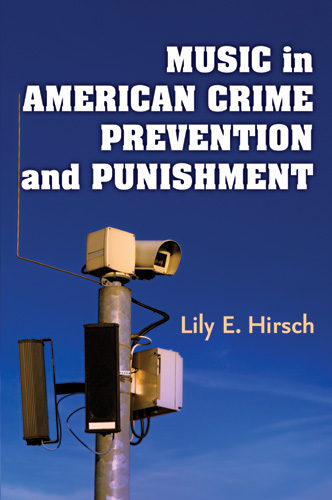
Lily E. Hirsch's Music in American Crime Prevention and Punishment is available in paperback from the University of Michigan Press ($30.00). Here is a description from the publisher's website.

Although the use of music for extramusical purposes has been a part of American culture for some time, the phenomenon remained largely unknown to the general public until revelations became widespread of startling military practices during the second Iraq War. In Music in American Crime Prevention and Punishment, Lily E. Hirsch explores the related terrain at the intersection of music and law, demonstrating the ways in which music has become a tool of law enforcement and justice through: police and community leaders’ use of classical music in crime deterrence and punishment; the use of rap lyrics as prosecutorial evidence; allegations of music as incitement to violence; and the role of music in U.S. prisons and in detention centers in Guantanamo, Iraq, and Afghanistan.
In the course of her study, Hirsch asks several questions: How does the law treat music? When and why does music participate in the law? How does music influence the legal process? How does the legal process influence music? And how do these appropriations affect the Romantic ideals underlying our view of music?

Music in American Crime Prevention and Punishment

Lily E. Hirsc
- See more at: http://www.press.umich.edu/4365408/music_in_american_crime_prevention_and_punishment#sthash.oeflVsGI.dpuf

Music in American Crime Prevention and Punishment

Lily E. Hirsc
- See more at: http://www.press.umich.edu/4365408/music_in_american_crime_prevention_and_punishment#sthash.oeflVsGI.dpuf

Music in American Crime Prevention and Punishment

Lily E. Hirsch
- See more at: http://www.press.umich.edu/4365408/music_in_american_crime_prevention_and_punishment#sthash.oeflVsGI.dpuf

Music in American Crime Prevention and Punishment

Lily E. Hirsch
- See more at: http://www.press.umich.edu/4365408/music_in_american_crime_prevention_and_punishment#sthash.oeflVsGI.dpuf

Abraham Drassinhower Rethinks the Basis of Copyright Law

Abraham Drassinhower, University of Toronto, has published What's Wrong With Copying? (Harvard University Press, 2015). Here is a description of the contents from the publisher's website.

Copyright law, as conventionally understood, serves the public interest by regulating the production and dissemination of works of authorship, though it recognizes that the requirements of the public interest are in tension. Incentives for creation must be provided, but protections granted authors must not prevent the fruits of creativity and knowledge from spreading. Copyright law, therefore, should balance the needs of creators and users—or so the theory goes.
Challenging this widely accepted view, What’s Wrong with Copying? disentangles copyright theory from its focus on the economic value of an authored work as a commodity or piece of property. In his analysis of copyright doctrine, Abraham Drassinower frames an author’s work as a communicative act and asserts that copyright infringement is best understood as an unauthorized appropriation of another person’s speech. According to this interpretation, copyright doctrine does not guarantee an author’s absolute rights over a work but only such rights as are consistent with both the nature of the work as speech and with the structure of the dialogue in which it participates. The rights protecting works of authorship are confined to communicative uses of the work and to uses consistent with the communicative rights of others—for example, unauthorized reproduction of a work is lawful when responding to the work requires its reproduction.
What’s Wrong with Copying? offers a new way to interpret and criticize existing copyright law and to think about the relation between copyright and digital technology as well as broader juridical, social, and cultural concerns.


Examining the Foundational Ideas of the French Constitution

David Marrani's Dynamics In the French Constitution: Decoding French Republican Ideas (Routledge, 2013) will be available in paperback on May 28, 2015). Here's a description of its contents from the publisher's website.
The promulgation of the Fifth French Republic Constitution in 1958 marked the end of a complex constitutional history that has since 1789 seen more than twenty constitutions and five Republics. Lasting now for more than fifty years, the Fifth Republic Constitution has proven to be the right settlement for the French people; a consensual text. However, while offering the appearance of stability, the Fifth French Republic Constitution has often been reconsidered and changed, not least in the year of its fiftieth anniversary, when the Constitution was 'modernised'. These dynamics of the Fifth Republic Constitution are neither a recent matter nor entirely the result of the successive constitutional amendments. Instead, the history of the Constitution has involved the resurgence of repressed archaic elements from the ancient regime, while the social, economic and environmental contexts have penetrated not only the text itself but more extensively its spirit, and behind it, the philosophy and our perception of the Republic. In Dynamics in the French Constitution, David Marrani questions the foundations of the French Fifth Republic. In using specific themes, current and traditional debates, contemporary and archaic factors, that have enlightened the road of long lasting Republic, the book explores some of the changes of the last fifty years and the tensions that are present within the constitutional text. In combining theoretical concepts of constitutional law with key contemporary and historical developments, such as the European integration, the response to environmental challenges, the practice of human rights and the pillars supporting French republicanism, this book offers varied and creative tools for a better understanding of the Republic of today.


Large Image