Showing posts with label Law and Evidence. Show all posts

June 2, 2020

Conklin on The Extremes of Rap on Trial: An Analysis of the Movement to Ban Rap Lyrics as Evidence (Book Review) @AngeloState

Michael Conklin, Angelo State University, has published The Extremes of Rap on Trial: An Analysis of the Movement to Ban Rap Lyrics as Evidence, at 95 Indiana L. J. The Supplement 1 (2020). Here is the abstract.
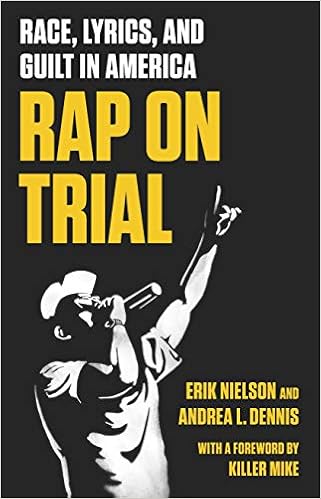
This Article is a review of Rap on Trial: Race, Lyrics, and Guilt in America. The book largely focuses on the dangers of allowing rap lyrics to be presented as evidence in criminal trials. The authors posit that the fictitious and hyperbolic nature of rap lyrics are misrepresented by prosecutors as autobiographical confessions that document illegal activity and violent character traits of defendants. The authors compare rap to other musical genres and conclude that racism is the underlying cause for why the genres are treated differently in court. The authors also advocate for evidence nullification and argue for a complete ban on all rap-related evidence at trial. This Article assesses both the strengths and weaknesses of the evidence presented to support these claims. Furthermore, this Article discusses pragmatic issues such as how the author’s advocacy for their more extreme proposals may be counterproductive to enacting their more reasonable proposals.
Download the article from SSRN at the link.

January 13, 2017

Frye on the History of Motion Pictures as Evidence @brianlfrye

Brian L. Frye, University of Kentucky College of Law, has published Reflections on Motion Picture Evidence. Here is the abstract.
Courts have long admitted motion pictures as evidence. But until recently, making motion pictures was expensive and cumbersome. Today, making motion pictures is cheap and easy. And as a result, people make so many of them. As Cocteau predicted, the democratization of motion pictures has enabled people to create new forms of motion picture art. But it has also enabled people to create new forms of motion picture evidence. This article offers a brief history of motion picture evidence in the United States, and reflects on the use of motion picture evidence by the Supreme Court.
Download the article from SSRN at the link.

August 21, 2015

Social Scientific Evidence and Its Place In the Contemporary U. S. Trial

Robert P. Burns, Northwestern University, School of Law, has published Social Scientific Evidence as Northwestern Public Law Research Paper No. 15-43. Here is the abstract.
This paper considers two distinct and internally complex language regions, those of the contemporary American trial and of the social sciences. Its concern is how the trial treats the social sciences, not how the social sciences treat the trial. It first surveys the controversies that surround each region and argues that those controversies counsel against any "craving for generality" in defining their relationship with one another. It then describes the canonical account of the trial implicit in the rationalist tradition of evidence scholarship and explains how that account understands the place of social scientific evidence within it. The paper contrasts that received view of the trial with a more concrete and, to my mind, adequate interpretation of the trial. It then provides an account of the various functions of the social sciences within that more adequate understanding of the trial.
Download the article from SSRN at the link.

August 19, 2015

Another Look at Daubert

Barbara P. Billauer, Institute of World Politics & Foundation for Law and Science Centers, Inc., has published Daubert Debunked: A History of Legal Retrogression and the Need to Redefine 'Science' in Law. Here is the abstract.
With ‘novel’ scientific discoveries accelerating at an unrelenting pace, the need for accessible and implementable standards for evaluating the legal admissibility of scientific evidence becomes more and more crucial. As science changes, legal standards for evaluating ‘novel’ science must be plastic enough to respond to fast-moving changes. This, ostensibly, was the Daubert objective. Since it was decided in 1993, however, Daubert’s impact has been hotly contested – with plaintiffs and defendants each claiming the decision unfairly favors the other side. New approaches are constantly suggested to deal with the perceived impact, although there is no uniform consensus of exactly what that impact is. Without accurate and demonstrable evidence of Daubert’s effect, however, the current ad hoc approach of suggesting new gatekeeping methods – is at best blind, and at worst, a partisan attempt to manipulate judicial decision-making. This article reports on a retrospective review of data regarding the impact of Daubert on admissibility of scientific evidence, for the first time – via a simple statistical perspective. This method confirms other assessments (using different methodologies) that (allowing for short-term corrections post-Daubert), there is no difference in outcome whether Frye or Daubert tests are used. Given that entirely different standards were used in both cases – yet yield similar results – one must acknowledge the possibility that both tests are ‘scientifically’ flawed. Further, empirical evidence and academic research agree that judges now substitute their own mechanisms for evaluating scientific evidence, in some cases applying neither Daubert nor the pre-existing Frye test. The reasons are unclear – perhaps due to an instinctual aversion to the muddied or flawed standards enunciated in both. Nevertheless, it does appear that judges are uncomfortable understanding several Daubert tests, including the ‘falsification’ criterion, which is the foundation stone of the Daubert analysis. Via re-analysis of the Rand study of 2001 which examined effects of Daubert, this research further highlights the scientific/mathematical illiteracy of the current legal community (especially, as I demonstrate, compared to judges pre-Frye). This situation presents a major obstacle for devising a workable method for judicial gatekeeping of scientific evidence. Ultimately, however, lawyers and scientists must first agree what ‘science’ is before better methods of evaluating proffered evidence can be devised. It is suggested that lawyers turn to scientists who developed the scientific method as it applies to the science of the courtroom: biology, chemistry and simple physics to enlighten themselves – substituting these approaches for the flawed and faulty premises advocated by Daubert and Frye.
Download the article from SSRN at the link.

May 11, 2015

The Treatment of the Law of Evidence in Legal and Political Contexts

Ronald J. Allen, Northwestern University Law School, is publishing A Note to My Philosophical Friends About Expertise and Legal Systems in Humana-Mente: Journal of Philosophical Studies (forthcoming). Here is the abstract.
This brief essay explores how understanding the treatment of expert evidence requires engaging with its legal and political contexts, and not just focusing on its epistemological aspects. Although the law of evidence and thus its treatment of experts is significantly informed by epistemological considerations, it is also informed by concerns over the organization of trials, larger issues of intelligent governance, social concerns, and enforcement issues. These five aspects to the law of evidence give rise to principles to guide the explicit structuring of the law of evidence that are identified here as well. This complexity helps to explain why the central issue of expert testimony is not the epistemological one of knowledge and belief but instead the conflict between educational and deferential modes of trial.
Download the essay from SSRN at the link.

April 18, 2015

Rhetorical Firepower In the Nineteenth-Century Courtroom

Simon Stern, University of Toronto Faculty of Law, has published Forensic Oratory and the Jury Trial in Nineteenth-CenturyAmerica. Here is the abstract.

The institution of the jury underwent radical change in the United States during the nineteenth century. At the beginning of the century, the jury trial was a form of popular amusement, rivaling the theater and often likened to it.The jury’s ability to find law, as well as facts, was widely if inconsistently defended. The trial’s role as a source of entertainment, and the jury’s ability to nullify, were consistent with a view of forensic oratory that emphasized histrionics, declamation, and emotionally charged rhetoric as means of legal persuasion. By the end of the century, judges had gained more control of the law-finding power, and various questions of fact had been transformed into questions of law. Many of the details that would have aided the lawyers’ dramatic efforts were screened out by a host of new exclusionary rules. The overall effect was to afford less scope for lawyers' emotional excesses — and to make those performances seem disreputable and outmoded. As an institution, the trial continued to figure significantly in American culture through the first three decades of the twentieth century. Numerous factors conspired to weaken the trial’s prominence after that time. Although these changes in forensic style have not usually been considered as a part of that narrative, they may have helped to facilitate the decline of the trial, by reorienting its function away from a broadly representative one, and towards one that emphasized dispassionate analysis in the service of objectivity and technical exactitude, appealing to a rather different community, made up of professional lawyers and those laypersons who could appreciate their values.
Download the paper from SSRN at the link.

May 13, 2014

The Legal Image

Elizabeth G. Porter, University of Washington School of Law, is publishing Taking Images Seriously in the Columbia Law Review. Here is the abstract.

Law has been trapped in a stylistic straitjacket. The Internet has revolutionized media and communications, replacing text with a dizzying array of multimedia graphics and images. Facebook hosts 150 billion photos. Courts spend millions on trial technology. But those innovations have barely trickled into the black-and-white world of written law. Legal treatises continue to evoke Blackstone and Kent; most legal casebooks are facsimiles of Langdell’s; and legal journals resemble the
Harvard Law Review circa 1887. None of these influential forms of disseminating the law has embraced — or even nodded to — modern, image-saturated communication norms. Litigants, scholars and courts have been rebooting the same formalist templates for over a century — templates that were formed before widespread use of the camera, never mind the computer. Outside of trial, where image-driven advocacy has a long history, legal practice begins and ends with text.
But over the past five years, for the first time — unrecognized by scholars or courts — creative trial lawyers, receptive judges and the iPhone camera are breaching these conservative bulwarks. Images are moving out of the evidentiary margins, driving argument in litigation documents from pleadings to judicial opinions. Unregulated, visual argument threatens fundamental premises of legal discourse and decision-making. Yet in comparison with law’s rich and detailed traditions for interpreting ambiguous text, lawyers and judges have few tools beyond common sense with which to ameliorate the interpretive risks of visual persuasion. “I know it when I see it” is not merely an aphorism; it is the reigning interpretive canon for images in law.
This Article, the first comprehensive scholarly treatment of images in written legal argument, establishes and critiques the nascent phenomenon of multimedia written advocacy as a vital, if potentially problematic, element of a lawyer’s toolbox. It argues that despite substantial risks, the profession should cautiously embrace the communicative power of multimedia writing. It concludes by offering concrete suggestions for the fair regulation of multimedia persuasion, including two foundational canons of visual interpretation — the basis for developing new traditions for integrating images into written advocacy.

Download the article from SSRN at the link.
