In the antebellum era, literary addresses were a common and popular form of public expression. Legal historians have profitably mined Fourth of July orations and addresses in Congress for insight into the intellectual worlds of the antebellum era. Yet, they have made virtually no use of the literary address, which are aimed at a different and more elite audiences. This essay employs a close analysis of nearly forty addresses given at the University of Alabama from 1832 through 1860 to gauge the changes in thought in the antebellum South on political theory and jurisprudence. It uses the addresses to create a picture of the world view of the judges. The addresses, moreover, illustrate the changes from Enlightenment ideas of moral and technological progress to a static, proslavery vision of the late antebellum period. They allow us to assess the orators' intellect, interests, knowledge, and belief systems. The addresses illustrate a wide-ranging respect for ideas, including the abolition of capital punishment, the scholar's search for truth against the tide of public opinion, republicanism, democracy, radicalism in American politics, and the importance of slavery to Southern culture. A final section turns to judicial opinions in Alabama to make a preliminary sketch of the ways that some of the ideas expressed in the addresses correlate with the moral philosophical views of judges. The addresses, thus, emerge as important windows into antebellum Southern thought and as vehicles for mapping in detail the intellectual world of moral and political philosophy inhabited by southerners, particularly judges and legislators in the years leading into Civil War. Finally, the essay begins to sketch key pieces of jurisprudence (such as considerations of utility, the importance of history and culture, and morality), as it provides a model of how to mine the hundreds of addresses delivered to other literary societies, north and south, in the years before Civil War for insights into legal thought.
September 30, 2005
Alfred Brophy on the Power of Antebellum Literary Addresses
Alfred L. Brophy, University of Alabama School of Law, has published "The Law of Descent of the Mind: Law, History, and Civilization in Antebellum Literary Addresses," in the University of Alabama Public Research Paper Series. It's available from SSRN. Here's the abstract:
September 25, 2005
New Biography of Mark Twain
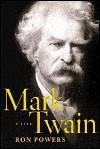 Ron Powers, Mark Twain : A Life
From Publisher's Weekly:
Starred Review. After dozens of biographies of Twain (1835–1910), one can fairly ask, "Why another?" But Powers, who wrote about Twain's Missouri childhood in Dangerous Water: A Biography of the Boy Who Became Mark Twain, early on promises "interpretive portraiture," which entails doing something that has never quite been accomplished before: presenting the totality of the man in his many moods and phases of life, including acerbic son and brother, prank-prone youth, competitive writer, demanding friend, loving husband and, eventually, globe-trotting celebrity. In doing so, Powers succeeds in validating his own assertion that Twain became "the representative figure of his times." Powers demonstrates that Twain embodied America during the tumultuous latter half of the 19th and early 20th centuries, from the divided self of the Civil War, through the unstable prosperity of the Gilded Age, to the verge of WWI. All the while, Twain asserted in both literature and life his confidence in New World progress over Old World conservatism. Unlike Twain, whose prose Powers characterizes as "wild and woolly," the biographer is lucid and direct while maintaining a steady hand on the tiller of Twain's life as it courses a twisty path as wide and treacherous as the Mississippi itself. Powers, a wise, if loquacious captain, takes us on a wonderful journey from beginning to end.
New Biography of Herman Melville
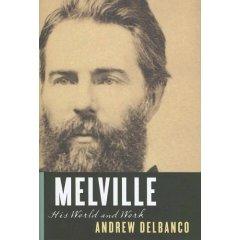 Andrew Delbanco, Melville: His World and Work
A review by Michael Dirda in the Washington Post says:
In the end, perhaps the most important use of literary biography is to send us back to a writer's books with increased understanding and renewed excitement. This Andrew Delbanco certainly does for Herman Melville. We are his beneficiaries.
September 23, 2005
Jane Baron on Law's Guilt about Literature
Jane Baron (law, Temple) has posed an abstract on SSRN about her new piece, Law's Guilt about Literature, in the forthcoming book, Toward a Critique of Guilty: Perspectives from Law and the Humanities, (A. Sarat & M. Anderson, eds., 2005), pp. 17-30. Here's the abstract:
This essay addresses the theme of guilt in law and literature from the law side. It argues that the legal academy's flirtation with literature reflects two forms of guilty uneasiness. The first relates to the question whether lawyers should be reading literature at all. This is a methodological anxiety. It presumes a distinctly legal method of analyzing legal issues, in which literature does not have a truly legitimate role. The second anxiety is substantive. It presumes law has an identifiable content, one that excludes much that appears in literature. Both presumptions are, I argue, questionable and make sense only if law is viewed as primarily doctrinal. Fundamentally, these varieties of uneasiness have their roots in the still unresolved conceptual challenge of figuring precisely what is "interdisciplinary" about the law and literature enterprise. Developing an honest form of "interdisciplinarity" will be difficult if not impossible because it requires an examination of usually unstated assumptions about the uniqueness of law.
September 1, 2005
Two recent assessments of Law and Literature
Within the past few months, from both sides of the table, important commentaries on the Law and Literature Movement (or "Enterprise") have appeared. Julie Stone Peters, a professor of English at Columbia, and Kenji Yoshino, a law professor at Yale, have each separately published articles -- she in the PMLA (Publication of the Modern Language Association), he in the Yale Law Journal. Peters' essay, which can be found at vol. 120#2 of the PMLA (2005), is called "Law, Literature, and the Vanishing Real: On the Future of an Interdisciplinary Illusion"; Yoshino's article is called "The City and the Poet" and appears in vol. 114 of the YLJ (2005) beginning at page 1835.
I happened to read these fine pieces in quick succession, yielding a benefit worth stressing here. People tend to neglect the truly interdisciplinary nature of the Law and Literature enterprise. Yoshino largely ignores the effect of this work upon literary theory and scholarship. Peters of course brings to the table her literary perspective; perhaps since she is a lawyer as well as an English professor, however, her effort also primarily "tests" the enterprise by weighing its influence on legal thought. Still, her literary sensitivities and training enhance her understanding of the enterprise's cross-disciplinary contributions, and she cites a number of literary scholars whom Yoshino has no doubt not read at all.
It is worth emphasizing that in the 30 or so years since the onset of the "modern" movement, Law and Literature has informed the thinking and writing of many folks who do not have law degrees. (Geoffrey Hartman pointed this out several years ago in associating Law and Literature with the New Historicism and in stating that the enterprise has also produced some of the best examples of "cultural criticism".) There are important communities of scholars working today -- many of them younger people -- in English and other Literature departments, not only in the United States but in Italy, France, the UK, Scandanavia, Germany and the Netherlands, as well as in Australia and China. Some of these efforts, directed of course to speech act theory, rhetoric and traditional literary analyses of stories but also to technical considerations of authorship, intellectual property, and inheritance law, have advanced these subjects in a singularly inter-disciplinary way. Lawyers writing about the enterprise need to be more aware, perhaps, of the balance that has been sought and in part achieved by some who helped "pioneer" the enterprise, many of whom are still active in LHI.
One final, related point: Yoshino's ascription to Robert Weisberg of the bifurcation of the field into "Law in Literature" and "Law as Literature" is incorrect; Peters does better in tracing out the origins of this seeming dichotomy. (Robert Weisberg has contributed in many other ways to the field, primarily as a critic of what he deems to be a certain sentimentalism or questionable insistence that somehow the mere reading of "Literature" will make lawyers better people. I have answered him on this, trying to show that much of the work -- again -- has been interdisciplinary -- it tends not only to conflate the fields despite their natural resistance to any threat to their perceived uniqueness; but it also undermines rather than promotes the unitary assumptions of each separate discipline, and perhaps especially the idea that "Literature" is inherently edifying!) More important though then who said what first may be the over-emphasis in both essays of this only-superficial if pedagogically useful dichotomy, which actually originated in a two-volume work from the early '60's by famous New York civil rights lawyer Ephraim London.
The reading of stories, in my view, serves as the predicate for the understanding of law -- its power to mobilize rhetoric and form to advance its often covert agendas . So "Law-in-Literature" and "Law-as-Literature" are intertwined, not separate. These two essays, which make many other points not addressed here, can be profitably read together by the decreasingly segregated audiences of lawyers and literati.
I happened to read these fine pieces in quick succession, yielding a benefit worth stressing here. People tend to neglect the truly interdisciplinary nature of the Law and Literature enterprise. Yoshino largely ignores the effect of this work upon literary theory and scholarship. Peters of course brings to the table her literary perspective; perhaps since she is a lawyer as well as an English professor, however, her effort also primarily "tests" the enterprise by weighing its influence on legal thought. Still, her literary sensitivities and training enhance her understanding of the enterprise's cross-disciplinary contributions, and she cites a number of literary scholars whom Yoshino has no doubt not read at all.
It is worth emphasizing that in the 30 or so years since the onset of the "modern" movement, Law and Literature has informed the thinking and writing of many folks who do not have law degrees. (Geoffrey Hartman pointed this out several years ago in associating Law and Literature with the New Historicism and in stating that the enterprise has also produced some of the best examples of "cultural criticism".) There are important communities of scholars working today -- many of them younger people -- in English and other Literature departments, not only in the United States but in Italy, France, the UK, Scandanavia, Germany and the Netherlands, as well as in Australia and China. Some of these efforts, directed of course to speech act theory, rhetoric and traditional literary analyses of stories but also to technical considerations of authorship, intellectual property, and inheritance law, have advanced these subjects in a singularly inter-disciplinary way. Lawyers writing about the enterprise need to be more aware, perhaps, of the balance that has been sought and in part achieved by some who helped "pioneer" the enterprise, many of whom are still active in LHI.
One final, related point: Yoshino's ascription to Robert Weisberg of the bifurcation of the field into "Law in Literature" and "Law as Literature" is incorrect; Peters does better in tracing out the origins of this seeming dichotomy. (Robert Weisberg has contributed in many other ways to the field, primarily as a critic of what he deems to be a certain sentimentalism or questionable insistence that somehow the mere reading of "Literature" will make lawyers better people. I have answered him on this, trying to show that much of the work -- again -- has been interdisciplinary -- it tends not only to conflate the fields despite their natural resistance to any threat to their perceived uniqueness; but it also undermines rather than promotes the unitary assumptions of each separate discipline, and perhaps especially the idea that "Literature" is inherently edifying!) More important though then who said what first may be the over-emphasis in both essays of this only-superficial if pedagogically useful dichotomy, which actually originated in a two-volume work from the early '60's by famous New York civil rights lawyer Ephraim London.
The reading of stories, in my view, serves as the predicate for the understanding of law -- its power to mobilize rhetoric and form to advance its often covert agendas . So "Law-in-Literature" and "Law-as-Literature" are intertwined, not separate. These two essays, which make many other points not addressed here, can be profitably read together by the decreasingly segregated audiences of lawyers and literati.
August 16, 2005
Franz Kafka & Law Bibliography
There's a good bibliography of writings about Franz Kafka and the law by Christine Corcos, although it was last updated in 1995.
August 12, 2005
Melville's Billy Budd and Security in Times of Crisis
My essay, Melville’s Billy Budd and Security in Times of Crisis, 26 Cardozo L. Rev. 2443 (2005), written for a law and literature symposium at Cardozo Law School, was recently published. The symposium was held in celebration of the 20th anniversary of the publication of Richard Weisberg's The Failure of the Word. The symposium issue will be out shortly, but all the articles are now available on Westlaw and Lexis.
I’ve placed a final version of my Billy Budd essay on SSRN. Here’s the abstract:
I’ve placed a final version of my Billy Budd essay on SSRN. Here’s the abstract:
During times of crisis, our leaders have made profound sacrifices in the name of security, ones that we later realized need not have been made. Examples include the Palmer Raids, the McCarthy Era anti-Communist movement, and the Japanese-American Internment. After September 11th, this tragic history repeated itself. The Bush Administration has curtailed civil liberties in many ways, including detaining people indefinitely without hearings or counsel. These events give Herman Melville's Billy Budd renewed relevance to our times. Billy Budd is a moving depiction of a profound sacrifice made in the name of security. This essay diverges from conventional readings that view Billy Budd as critiquing the rule of law. Instead, Billy Budd supplies us with a radical and unsettling set of insights about why our leaders often fail to do justice in times of crisis. The novella suggests that by manipulating procedure under the guise of law, Vere gives the appearance of following the rule of law, when, in fact, he is not. This is particularly illuminating, as the Supreme Court in Hamdi v. Rumsfeld has held that normal procedures required by the Due Process Clause can be modified and watered-down for enemy combatants.This essay is a quick read for anybody interested in thinking about how Billy Budd relates to security and civil liberties.
Josef K. -- Justice Denied. Again.
 This is something I posted about a month ago on PrawfsBlawg, but it's relevant to this blog too, so I'll cross-post:
Judge Alex Kozinski and his law clerk, Alexander Volokh recently published an opinion by a panel on U.S. Court of Appeals for the 9th Circuit in a law review article. The article is called The Appeal, 103 Mich. L. Rev. 1391 (2005). The judges on the panel were Judges Alex K., Bucephalus, and Godot. No reason is given for the inexplicable delay, as the case was argued and submitted in 1926 but not decided until 2005. And no reason is given why the opinion was published in the Michigan Law Review rather than in the Federal Reporter. Shame on the panel!
The opinion begins:
The late Josef K., a thirty‑something male, claims that "[s]omeone must have slandered [him], for one morning, without having done anything truly wrong, he was arrested." T.R. 3.The panel denied K.’s claims regarding his arrest:
The procedural history of this case is complicated and patchy, but what is clear is that, after being rude to his arresting officers, appellant came late to his initial interrogation and disrupted the proceedings. He refused to attend further interrogations, submitted no evidence or brief in his defense and repeatedly accused judicial authorities of corruption and incompetence.
He was apparently convicted, though the conviction does not appear in the record. On the eve of his thirty‑first birthday, K. was taken to a quarry by two guards and executed. "With failing sight K. saw how the men drew near his face, leaning cheek‑to‑cheek to observe the verdict. 'Like a dog!' he said; it seemed as though the shame was to outlive him." T.R. 231. As it has.
K. appeals, alleging unlawful arrest, inadequate notice, due process violations, systemic corruption, ineffective assistance of counsel and actual innocence. We affirm. . . .
Even though he was under arrest, K. was still allowed to "carry[] on [his] profession" and was not "hindered in the course of [his] ordinary life." T.R. 17. Also, K. admitted that the arrest "ma[de him] laugh," T.R. 47, and that, to the extent the incident tended to "spread the news of [his] arrest [and] damage [his] public reputation, and in particular to undermine [his] position at the bank," "none of this met with the slightest success." T.R. 48. Without cognizable harm, K. lacks standing to contest his arrest. De minimis non curat lex. . . .The panel affirmed the conviction, denying poor K. justice once again (the first time being his sudden execution):
While we're on the subject of trifles, we address K.'s claim that he was arrested without a warrant. At the time of the arrest, K. showed the guard his identification papers and demanded, in return, to see the guard's papers and the arrest warrant. T.R. 8. Not only was he not shown these, he was also told that the guards "weren't sent to tell" him why he was arrested. T.R. 5.
We see no problem. Before ordering an arrest, the authorities "inform themselves in great detail about the person they're arresting and the grounds for the arrest." T.R. 8. They don't "seek out guilt among the general population, but . . . [are] attracted by guilt . . . . That's the Law." T.R. 8‑9; see also Decl. of Penal Colony Officer ("Guilt is always beyond a doubt."); Gerstein v. Pugh, 420 U.S. 103, 113 (1975) (arrest warrant not necessary for arrest supported by probable cause).
K.'s only clear claim is that he is innocent. See, e.g., T.R. 47, 148, 213. But how can K. credibly claim innocence when he admits to not knowing the law? T.R. 9. He might as well dispute what the meaning of "is" is. The fuss he makes about how innocent he feels "disturbs the otherwise not unfavorable impression [he] make[s]." T.R. 14. Especially ludicrous is his suggestion that no one can "in general be guilty," as "[w]e're all human after all, each and every one of us." T.R. 213. That's how guilty people always talk.The opinion concludes:
In any event‑‑and this is the nub of the matter‑‑we fail to see what's so special about being innocent. See Commonwealth v. Amirault, 677 N.E.2d 652, 665 (Mass. 1997) ("[O]nce the [criminal] process has run its course . . . the community's interest in finality comes to the fore."). We will assume, for the sake of argument, that K. did not commit the crime for which he was convicted and executed. Can we be sure that K. did not commit some other, worse crime, that was overlooked? To ask the question is to answer it. The law works in mysterious ways and that which should be done is presumed to have been done. It follows that that which was done needed doing. K. was convicted and executed after a legal process that, as we have seen, is unimpeachable. He must have deserved what he got.
K.'s overarching complaint, that "the Law should be accessible to anyone at any time" and that he has been denied entry to it, T.R. 216, "rings hollow." Alex K., Scholarship of the Absurd: Bob Bork Meets the Bald Soprano, 90 Mich. L. Rev. 1578, 1583 (1992). The very existence of these proceedings has provided an entrance for K. to defend himself. K. has consistently refused to cooperate with court officials' repeated attempts "to straighten out his complex case, regardless of the time and cost." T.R. 251. No one else could gain admittance here, because this entrance was meant solely for him. If he nevertheless remained outside, he has only himself to blame.This opinion is in flagrant disregard of the law. I am especially outraged that Judge Godot never attended oral argument, and the opinion has been written without any indication he has read the papers or discussed the case with the other panel members. Such a disregard for justice is Kafkaesque, to say the least.
Perhaps the most ironic opinion pertaining to Josef K. is a real one by the U.S. Supreme Court. In Joe Kafka v. United States, 121 S. Ct. 1365 (2001), the U.S. Supreme Court issued its typical one-sentence order, denying certiorari without explanation: “The petition for writ of certiorari is denied.” Recall the parable in The Trial: “Before the Law stands a doorkeeper. . . . The doorkeeper sees that the man is nearing his end, and in order to reach his failing hearing, he roars to him: ‘No one else could gain admittance here, because this entrance was meant solely for you. I’m going to go and shut it now.’” A one sentence denial of cert., without explanation . . . how appropriate for Josef “Joe” K.
Billy Budd Resource
 For those interested in Herman Melville's Billy Budd, there's a terrific online resource to the text. It provides a complete text of the work with hyperlinks that contain illustrations, definitions of nautical and other terms, and additional resources.
Law & Literature Syllabus
I've been teaching a seminar in law and literature for many years, and I thought I'd provide a link to my syllabus if it will be of use to anybody. The basic pedagogical approach to my course is to teach it in a jurisprudential manner, illustrating how literature contributes to elucidating enduring philosophical issues in the law. There are, of course, a myriad of different approaches to the course, but for those interested in mine, the syllabus is very detailed and might be of interest.
The Beginning
This blog will cover law and humanities topics. It is still in the early stages. It will be a group blog, with a variety of contributors from different fields. Right now, it is still in its infancy, but it is my hope that it will blossom over time into a leading resource for scholars, students, lawyers, and anybody else interested in the intersection between law and the humanities.
Subscribe to:
Posts (Atom)

 Posts
Posts



